

LEC Versus kicks off on Saturday, January 17. Among the twelve teams competing this split, Natus Vincere stands out as perhaps the most intriguing project. After a turbulent first split in the league, where they had to navigate the vestiges of the team they replaced, the Ukrainian organization has chosen to rebuild almost entirely from scratch. Betting on youth, potential, and a long-term vision rather than immediate results.
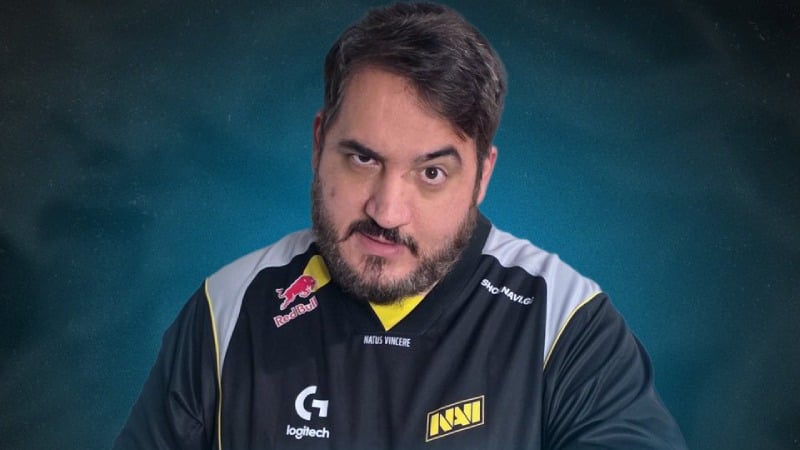
Like astronauts embarking on an interstellar voyage, this roster is venturing into uncharted territory. There are no veterans to guide them, no established stars to rely on. Just a group of young talents, a head coach with a clear philosophy, and a mission that extends far beyond a single split. Hotspawn sat down with Vasilis “TheRock7” Voltis, NAVI’s head coach, to discuss how this ambitious project came together, the philosophy behind betting on rookies, and what it will take to turn potential into results.
TheRock’s journey to NAVI began earlier than most expected. He left KCB before the EMEA Masters, a decision that raised eyebrows but reflected a deeper professional philosophy.
Imagine if I was staying in LFL and I had to scrim with KCB and do the interviews and all the conversations with NAVI as well. I would have to give either NAVI or KCB less and that’s an unprofessional perspective. I didn’t want to give less to one of them because I respect both organisations. So I had to choose. And it was really good to work early on the offseason. Even if you couldn’t sign a player immediately, you’re doing all the documents, the process, how you want to approach the project, what you want to do, conversations with management—what’s the goals, what’s the plan, what’s the vision for one year, two years. It’s not something that you decide in a week. Whoever does that in a week is not doing it correct.
The early start allowed NAVI to secure two key pieces before summer even started: Rhilech, a jungler TheRock had tried to recruit twice during his KCB tenure, and SamD, who would provide stability in the bot lane. From there, the puzzle began to take shape.
TheRock’s philosophy underwent a significant evolution after his time at KCB. Working with Yukino—a high-risk, high-reward rookie—changed his perspective on roster building entirely.
At the beginning of last year, I was more in the mindset of ‘experienced players, maybe one rookie’ when it came to roster building. But after working with rookies, I was more on the edge of ‘I need more people who I can impact more as a coach. I can put them on my vision, and they can improve more.’ It’s high risk, high reward. Maybe they will not improve—then it becomes the high risk and low reward case. But it’s more exciting for me, at least.
The difference, TheRock explains, comes down to adaptability. “It’s really hard to change veterans. Maybe you can change them 10, 15, maybe 20 percent if you’re lucky. But you will not get the 65-70 percent that you can get from a rookie.”
If this mission has a central figure, it’s Rhilech. The Turkish jungler was locked in before summer split even began—a testament to how highly NAVI valued him.
I wanted to work with Rhilech twice during my KCB year, but because of buyouts and everything, it didn’t happen. I was really excited to work with him because in my eyes, it was similar to the Yukino case—a raw diamond that needs to be developed and learn the game as it should be played. He already has really good fundamentals and a really good mindset. I was like ‘I’ll work with this guy and he will be good, 100%.’
NAVI’s early move to secure both TheRock and Rhilech sent a clear message about their commitment to the project—even if it meant having a jungler under contract who couldn’t play for months.
Every crew needs someone to keep them grounded. For NAVI, that person is Maynter. The toplaner’s work ethic and professionalism made him the ideal veteran presence in a roster full of young talent.
Watching how Maynter is doing things—it’s what every LoL pro player should do on a daily basis. How many games he plays, how many games he reviews, his mindset about healthy habits outside of the game—gym and this kind of stuff. It fits a good image of a player that others can follow. He will bring the stability and the hardware that we need in our roster.
The decision wasn’t easy—TheRock had to choose between Maynter and other LEC toplaners. But for a roster built on development, having the right example to follow mattered more than raw ceiling. Beyond gameplay, there’s also symbolism: a Ukrainian player joining Ukraine’s most iconic esports organization. Maynter doesn’t just anchor the roster—he represents the flag.
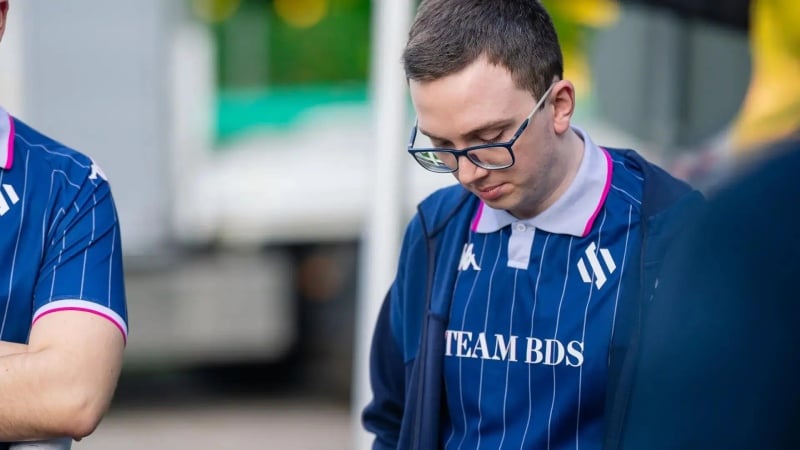
Perhaps no player on this roster carries more baggage than Parus. After a difficult year at BDS, the support finds himself at the bottom of most tier lists heading into 2026. TheRock doesn’t care.
I know everyone from outside says he had a bad year—that’s a fact, and he’s aware of it too. But I have seen his potential back in LFL, back in TCL. I can see the value of the player. I know that if I can make him work under the specific mindset and structure that I want, he will pop off, 100%. He has everything that is needed in-game: aggression, a versatile champion pool, creativity. He just needs structure now—step by step stuff and some standard fundamentals.
The pursuit of Parus took over a month of persistent effort. When asked about the player’s confidence issues at BDS, TheRock acknowledges the importance of trust: “Confidence is really important. You cannot win games if you don’t believe in yourself or in the people near you. I will trust my players on what they want to do, on their ideas. I’m pretty sure he’ll change everyone’s opinion of him after the first split, maybe second—we will see.”

The mid lane position proved the trickiest to fill. TheRock initially targeted Vladi—his former player in WLG—but when that fell through, the decision came down to Poby and Czajek.
It was always Vladi and Poby at the top of my list, based on what I wanted from a mid laner with Maynter. I need specific traits to complement him. When Vladi decided to go to Fnatic, it was Poby and Czajek. We decided Poby fits more in the roster—and the whole atmosphere in the team.
The Korean mid laner also serves a secondary purpose: ensuring SamD isn’t isolated as the only Korean. “With two Koreans, you don’t leave one Korean alone,” TheRock explained. “Different parts of communication work better that way.”
NAVI’s head coach is clear-eyed about the difference between his roster and one built around veterans. Using the hypothetical of Parus joining G2, he illustrates the trade-off.
In G2, there’s already Caps and BrokenBlade—pillars you can rely on. On tough situations, experienced people will make decisions for you, micromanage you, guide you. But that’s the high risk, high reward of our roster: our rookies need to make those decisions themselves. They need to find solutions, take responsibility on their own. No one will micromanage you. Either you swim, or you don’t survive.
It’s a philosophy born from TheRock’s background in basketball coaching. He’s seen what a rookie roster can become when forced to grow on their own. “It’s not easy. But if the high reward comes, these players will grow much more because of it,” he added. “And they will be your region’s next leaders—maybe not in NAVI, but that’s how you help the system as well.”
Right now, the team’s identity is straightforward: aggression. “We are a crazy team that wants to fight for every single thing on the map,” TheRock admits. “Of course, we will play super aggressive, and you will see us doing crazy stuff.” But the long-term vision is more nuanced.
I want the balance in between. I know we will make rookie mistakes—maybe we will lose some games because of them, which is okay. That doesn’t mean I like losing—I hate losing. But in order to grow, you need to understand how you win and how you lose. The aggression needs to be limited. We need to understand structure, steps, and fundamentals.
When asked whether the team would rely primarily on Rhilech to carry games, given Poby’s strong laning and Maynter’s weak-side proficiency, TheRock pushed back. “Personally, I always want everyone to bring something that will carry games. People forget Maynter’s Jax, Gwen, Aatrox—these picks can be really annoying for some specific drafts. People will expect something specific from us because Rhilech is very aggressive. But I think we have a lot of tricks in development to catch them where they will not expect us.“
The realistic goal for Year One is top four by the end of the season said TheRock. But he refuses to frame it as the ceiling.
“I’m not delusional—I understand our situation. We need to progress in order to get there. But I will not say ‘top four is fine.’ It’s not fine. I want to go to Worlds, I want to go to MSI. This is why I’m doing this. I don’t want to just be part of the system. I’m working from nine in the morning until one at night, day after day. This is the reason you leave your home, you leave your beloved ones, you don’t speak to your friends every day—because you’re dreaming of something.”
For the short term, TheRock is focused on the reaction to the first three official matches. “How we act after those three official [matches] will be the most important growth part for us. Even if we go 3-0 or 0-3, it doesn’t matter—we need to understand why we won or why we lost.”
For NAVI, this isn’t about immediate results. It’s about laying the foundation for something bigger. Day One is here, the mission has begun.
We needed a fresh start. Introducing our 2026 LEC Roster. pic.twitter.com/MpwsAwTrhI
— NAVI LoL (@NAVILeague) December 17, 2025
And stay up to date on all the latest trends in esports
By submitting your information you agree to the Privacy Policy and Terms of Use