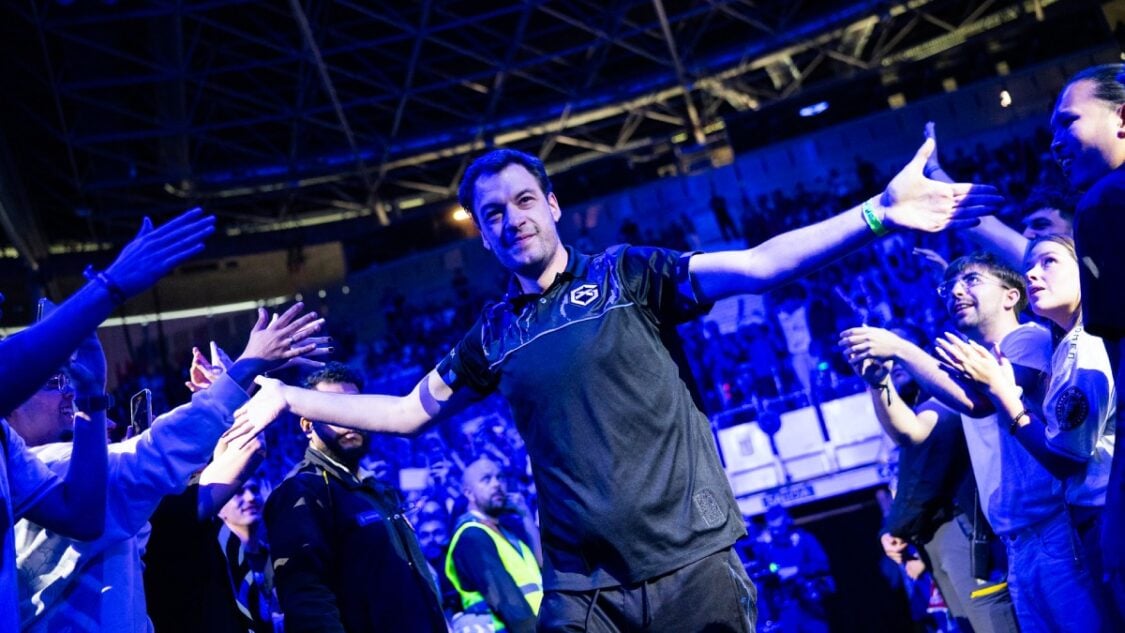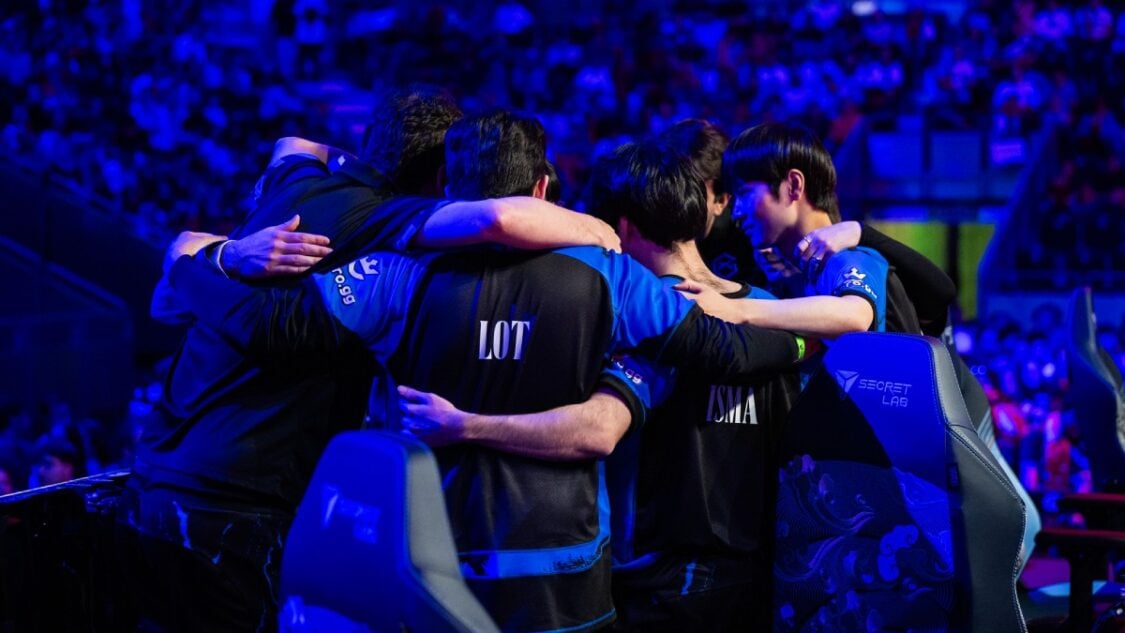


GIANTX enters 2026 with a familiar narrative: a team packed with talent, dominant in scrims, yet perpetually stuck at the gates of the top four. This year, they’ve made a bold statement by keeping their entire starting five together—a bet on continuity in a league obsessed with change. Hotspawn sat down with André “Guilhoto” Guilhoto, GX’s head coach, to discuss the decision to maintain roster stability, the team’s identity, the demons they need to slay, and their ultimate ambition.
For Guilhoto, this offseason was remarkably straightforward: “[It was] very chill… The most chill offseason that I’ve ever had. Zero worries,” he explained. Despite rumors swirling around potential moves—including a failed pursuit of Razork and Fnatic’s interest in support Jun—the coaching staff never wavered from their core plan.
The Razork situation was simple: GIANTX wanted him, but Fnatic declined their offer while supposedly accepting one from Heretics.
It was kind of weird because they accepted an offer from Heretics but didn’t accept ours… I’m not sure what happened there, but on our side, it was either we get Razork for his in-game leadership or we keep the work we already started with Isma. There was no other options for us in the jungle. Fnatic didn’t want GX Razork to happen.
As for Jun, the interest was one-sided all the same: “They wanted Jun and we didn’t want that to happen.” The media painted these discussions as significant sagas—for example, pointing to the fact that Fnatic reportedly sent two offers to GX for their support, including one close to €200,000—but Guilhoto dismisses the narrative. “Since this offseason was overall calmer than most other offseasons, there wasn’t much to talk about. So most people were talking about the small things… But it was just some ideas being discussed, no big deal.”
Sorry 🙅♂️🙅♂️ pic.twitter.com/21cPccLjWq
— GIANTX League of Legends (@GIANTXLeague) November 21, 2025
The decision to keep all five players together wasn’t made by default—it was a philosophical choice. In a region where rosters are shuffled at the first sign of trouble, Guilhoto is betting on a different approach.
I believe continuity is something important that I wanted to try in esports. From my experience, it’s very easy to determine the problems that your team has. But you never know what problems the other players that you might get will bring to you. Every team has their problems: we just prefer to keep working on the problems we know.
This philosophy extends beyond mere pragmatism. Guilhoto sees a systemic issue in how League of Legends teams approach roster building. “Only in League of Legends, not even in esports—it’s literally only in League of Legends we see that many changes. People are giving up on people way too easily. And to me, a lot of the time, it’s less about the players’ faults and more about staffs lacking the ability to help them.”
For GIANTX, the logic is now clear: “We made good progressions and, most importantly, more than in-game, we identified good ways to help players improve later in the season. Now we want to have a full year with that knowledge and see how far we get.”
GIANTX’s playstyle has always been aggressive—sometimes to a fault. Players like Jackies and Isma are known for pushing advantages perhaps too hard, leading to throws that have cost the team crucial games. But rather than rein them in, Guilhoto wants them to push even harder.

I keep pushing them to go for more. I believe that you can’t really progress without those mistakes and those throws. The worst thing that I can do is to kind of try to limit the confidence of a player, or his creativity. I can just adjust it and make sure that he learns from it.
This isn’t recklessness—it’s a calculated bet on identity. Guilhoto also sees beyond regional success with that philosophy. “Teams that were naturally passive and only played for drakes and teamfights, hoping for the best, never had any success when we go out there [at internationals]. In fact, they are kind of embarrassed or humiliated,” he said. “As a team, we want to be part of that change in the region.”
GIANTX would rather fail swinging than die slowly: “I want my team to keep being aggressive. I want my team to keep pushing forward. And if we have to risk a couple of throws, we will do it. With the full belief that this is how we want to be known and how we want to play the game.”
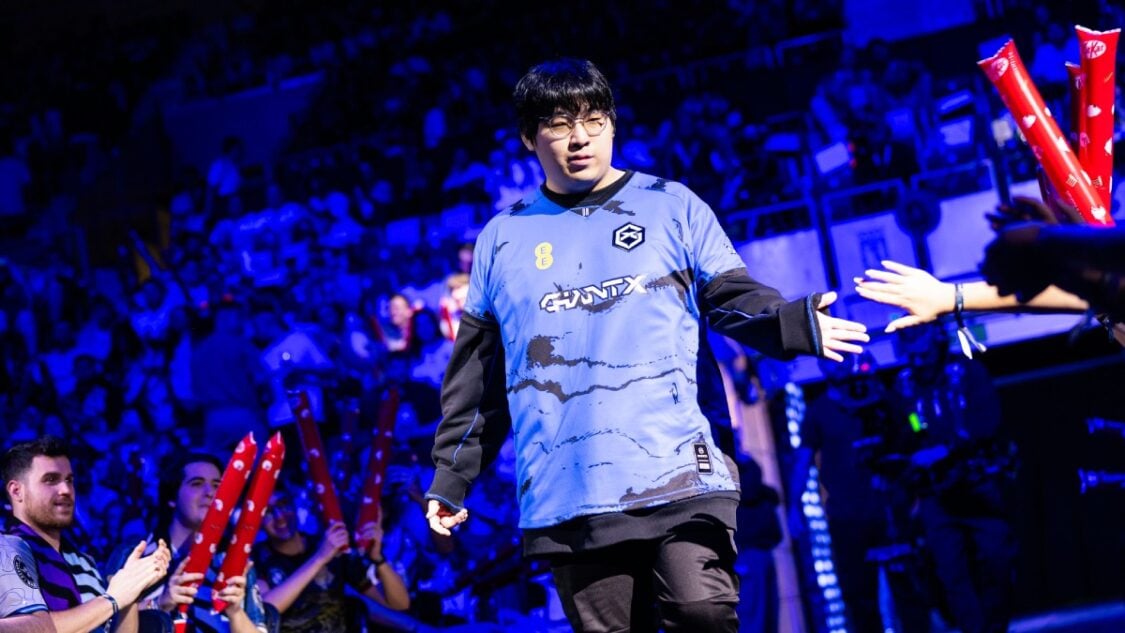
One player in particular has been central to discussions about GIANTX’s stage struggles: Noah. The AD carry has been in the LEC for more than three years now, and a pattern has emerged: he’s very dominant in regular season but tends to falter when the stakes rise highest.
Guilhoto acknowledges the issue but reframes the responsibility. “It’s not about whether I believe it’s going to be different or not in the fourth year. I think that a lot of times it’s up to us as a staff to be able to help him and us as a team to be able to help him.”
There have been signs of progress. Noah’s longtime struggle against G2 saw a breakthrough at the Madrid crowd event, where he performed admirably under pressure. “He showed that he can do it. It’s just a matter of being able to do it consistently. It’s no longer ‘he can’t do it’—he’s just not consistent on doing it.”

Not only him, but the team as a whole needs to rise when it matters most, as they failed to do in the Summer playoffs against Fnatic, for example: “After game one, everyone was out of the series, and that’s something we have to improve. Especially as a staff, more than Noah or the players.” When asked about the demons the staff needs to help Noah overcome, Guilhoto’s answer is telling: “The thing is that there are a lot of them. We have a lot of them to beat.”
The “scrim champions” label has followed GIANTX like a shadow. The team’s practice results rarely translate to stage performance, a frustration that has defined their tenure in the LEC. But Guilhoto offers a contrarian perspective.
Everyone always talks about this transition and that we are scrim champions. But maybe other teams just don’t give enough sh*t about scrims. It can also be seen from that perspective, you know?
Rather than obsessing over the scrim-to-stage gap, Guilhoto has shifted his focus entirely: “I’m not focused at all on transition from scrims to stage. I’m focused on improvement from stage to stage. More than ‘how can we put our scrim performance on stage,’ I’m more concerned about ‘how can we improve the performances that we had on stage, period.’”
A subtle but significant reframing. The problem isn’t that scrims don’t translate—it’s that stage performances need to improve on their own terms. “If we have to change something in scrims to make our stage performance increase, that to me is more important than having to change something to help us play stage-like scrims.”
Looking at the competitive landscape, Guilhoto is realistic about where GIANTX stands. “The top will be G2, KC, MKOI. And then we’ll be battling for the next spot. The goal is throughout the year to fight to kick one of those three out and put ourselves in.”
The ultimate ambition is clear: “Making it to Worlds. That’s the most important. And obviously, if we are able to win a split, that would be the cherry on top. But the goal is to get international experience.”
For a team that has spent the last two years as gatekeepers of the top four, the path forward requires more than incremental improvement. It requires a transformation—from giants who dominate scrims to titans who conquer the stage. The walls have stood long enough. This year, GIANTX intends to break through.
No changes. Just confidence 👊
This is our roster for the LEC 2026.
After our progress this year, we believe in this team more than ever. pic.twitter.com/VMHJM2QuRH
— GIANTX League of Legends (@GIANTXLeague) December 18, 2025
And stay up to date on all the latest trends in esports
By submitting your information you agree to the Privacy Policy and Terms of Use