

How to Play CT-Side in CS2: Full Guide

Saumya Srijan

Share:

You get a round win on the CT side if you either eliminate the Terrorists before they get the bomb down, or defuse the bomb, or in the third case, stop the Terrorists from getting the bomb down within the round time of 1 minute 55 seconds.

In this guide, we will be taking a look at the various concepts you need to understand to help you play better on the CT side in CS2.

Understanding CT-side roles

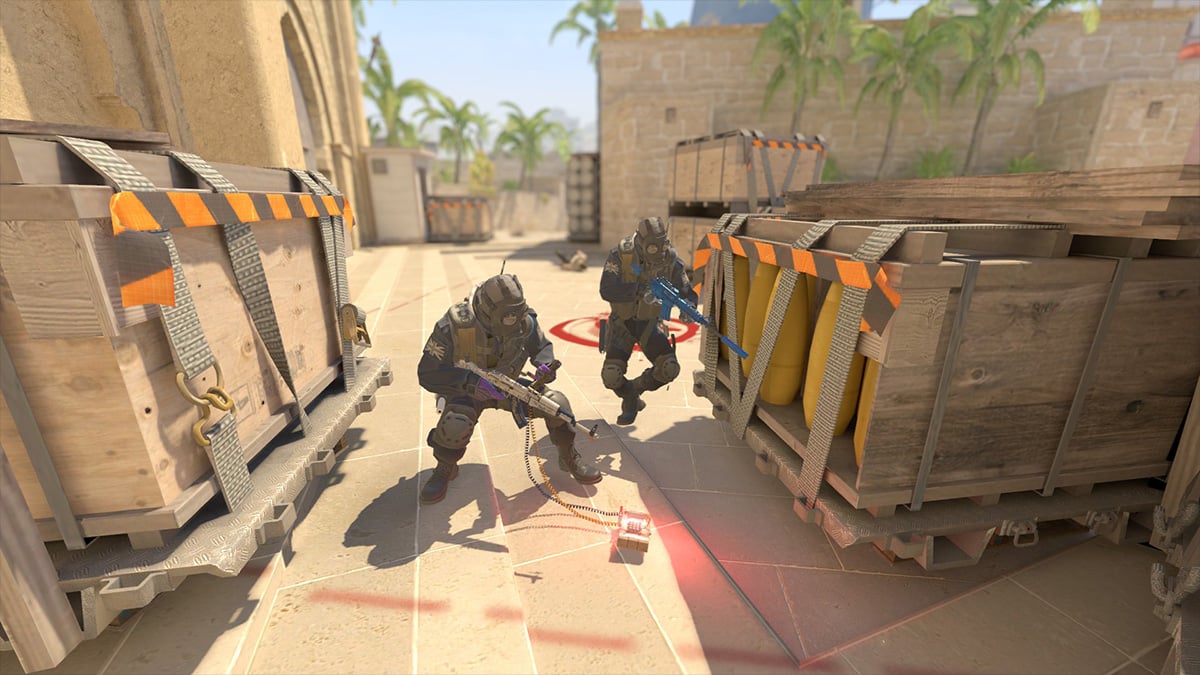
Default CS2 CT-Side Agent (CS2 Counter-Terrorist Skins)

You will find some things common in all the Active Duty maps in CS2; they all have two bombsites, and a Mid that somehow connects them. This makes it easier to have designated roles. Usually, there will be one anchor on both bombsites, while there will be two rotators playing a supporting role. There will also be an AWPer, who plays completely differently and can be the lynchpin of the defense. Let us look into these roles in more detail.

Anchor

The anchor is the player who is responsible for the bombsite he is guarding, for example, the Pit guy on Inferno, or the Van guy on Mirage. Many times, he will be left to his own devices while the rest of the team is either holding mid, looking for information, or, in some cases, stacking the other bombsite.

Before we talk about how an anchor should play, it is important to understand how he should not play. The absolute nightmare for the team occurs when the anchor dies early, as the CTs lose the bombsite and are pushed into a forced situation of saving. Even going one for one as an anchor can sometimes not be ideal, especially when reinforcements are far. This makes the job of an anchor especially hard; when there are flashes and smokes raining down on you, how are you supposed to get multikills? Well, there are three ways you can play as an anchor.

You either find a position where you can get information while being hard to kill, so you can spot, use utility, and call reinforcements. In the mid rounds, when you don’t have utility, you can play off angles, where the first kill is easy, then you ask your teammates for a flash, or use your own utility to try and get a second kill before you are traded.

In the third scenario, you play a passive angle, where you get one kill and fall back. And if you are threatened, sometimes it makes sense to give up the bombsite to save your life, and hold a more passive angle. The absolute worst play, in theory, would be to go for a hero play and give up the bombsite as well as the man advantage.

And lastly, if you are the anchor, don’t hesitate to ask your supporting teammate for an extra smoke in the early round; it buys you time, and time is the real currency on the CT side.

Rotator

The rotator is the first guy to leave his area when the enemy pressurises or executes the other bombsite. He will usually be the one saving a flash or two, so that he is able to assist the players on the bombsites. Usually, teams at higher levels will leave some utility in spawn, so that the rotator can scoop it up while rotating.

It is very important for the rotator to have a sense of timings and the enemy’s whereabouts. This becomes possible with effective communication, so the rotator knows when to scoot over. A fast rotation can be the difference maker in getting you the round win, but sometimes it can also open up avenues for the Terrorists to exploit. This is why it is very important to call your rotations, so your teammates are aware of the potential gaps in the defense.

AWPer

Now comes the AWPer, and it is a completely different discussion in itself. Sometimes, the AWPer will play as the rotator, and sometimes, the AWPer will also be left to anchor a bombsite. What the AWPer needs to be, and you have probably heard it in almost every AWPer tutorial guide, is unpredictable. It is to be mobile.

Not only can an AWPer go for picks early, but he can also lock down a common chokepoint. The AWPer can easily be the centerpiece in a defence, so if you are the AWPer, don’t hesitate to ask your teammate to support you while you go for an early pick. Avoid getting traded early, then reposition to keep the enemy guessing.

Setups that you can play on the CT side in CS2

Now that we understand roles, how do you defend a bombsite? Well, always remember to play as a team. If you take bombsite B on Inferno as an example, don’t look at the two players individually; your positions should complement each other.

For example, you can have one player jiggling in CT for information, while the other holds a Molotov or smoke to throw when the CT guy makes contact. Then you can reposition into crossfires, which is the bread and butter of the CT setup. This can easily go wrong as well, so make sure you practice in offline servers, or you will be caught with a nade in your hand and end up raging at your own teammate.

If you want a picture of what an ideal CT setup looks like, imagine bombsite A on Inferno, where one guy is playing on Balcony. The Terrorist rushing short and looking at Pit dies from the CT on Balcony. The second T coming from Short tries to trade, but gets killed by the CT in Pit who peeks on the contact from Balcony. And then, when the third T tries to enter the site looking at Pit, he gets killed by the CT playing on the site. This is the dream of what an ideal bait-and-switch should look like.

There is a lot of room for creativity here, as you can play double pit, with one guy peeking and one guy hiding. Terrorists will kill the first CT but won’t expect the second, and that’s when he can strike with multikills.

How to use utility effectively on the CT-side

Utility usage is another important concept you need to understand to play well on the CT side. Utility can help you gain early map control and hold off pushes so reinforcements arrive in time. It should be used deliberately.

Gaining early map control will not only allow you to gain tempo on the Ts, but also give you information. For example, CTs getting early banana control can leave just one guy jump-spotting with a smoke in hand, while four CTs stack on the A bombsite. If the banana CT spots anyone, he can delay with a smoke to allow for rotations.

Remember, one smoke lasts for around 18 seconds, and one smoke in the late round is worth diamonds. So it is important not to throw utility recklessly. In CS2, you can also drop utility, so you can leave your anchor with one extra smoke and be mobile yourself.

How to retake a bombsite

How Long Are CS2 Matches

After you lose the bombsite and are forced into a retake, group up. The absolute worst thing you can do is try to be a pretentious hero and end up being an easy kill. You need to wait for your teammates, communicate about utility, and note the player with a kit, then attack as a team.

Have one guy throw utility, and as one guy clears angles, the other guy can cover for him for potential peeks. Clear angles step by step, use smokes and mollys to eliminate positions, and flashes to break choke points.

And if you lose a few picks early in the retake, don’t shy away from saving. It is equally important to keep the CS2 economy in mind, because CT-side is expensive, and a bad save decision can snowball into a worse half.

CT-Sided Maps in CS2

Nuke CS2

Most maps in CS2 are considered CT-sided, but there isn’t a world of difference on most. A map favours the CT side if it offers the defensive side quicker rotations, bombsites with a lot of cover, and faster access to choke points than the Terrorists from their respective spawns. Nuke and Overpass are two of the most CT-sided maps in CS2.

Overpass is heavily CT-sided because it offers very quick rotations to the CTs. Moreover, the A bombsite offers a plethora of plays to the CTs, allowing them to sometimes even play 3 CTs on the B bombsite. Also, the two chokepoints on B are tightly cramped, making it easier for CTs to defend with smokes and molotovs. Nuke, on the other hand, is slightly more CT-sided in CS2. This is because of the amount of information and control available to CTs, making it easier for them to rotate and defend.

Article Tags

No tags found

Tournaments

No tournaments found
Saumya Srijan

Saumya Srijan

Counter strike writer saumya
Wallowing in his long-term, wildly unhealthy relationship with Counter-Strike, Saumya has now turned into a full-blown FaZe fan who likes to write about things he loses his sleep over.
More from Saumya Srijan >