

Calibration in Dota 2 is a huge part of the long journey to gaining ranks. Every player is excited to see where they’ll land in the ranking system so they can compare their current MMR with their friends. However, everyone must go through a calibration period to see where they stand. Here’s everything you need to know about calibration in Dota 2.
Calibration is the Dota 2 phase where the game evaluates your performance to determine where your MMR should be placed. Players must play ranked matches under the calibration phase, which helps the game observe results and consistency across these matches.
Seeing your performance will help the game understand how strong you currently are, and which rank is appropriate for you to play on.
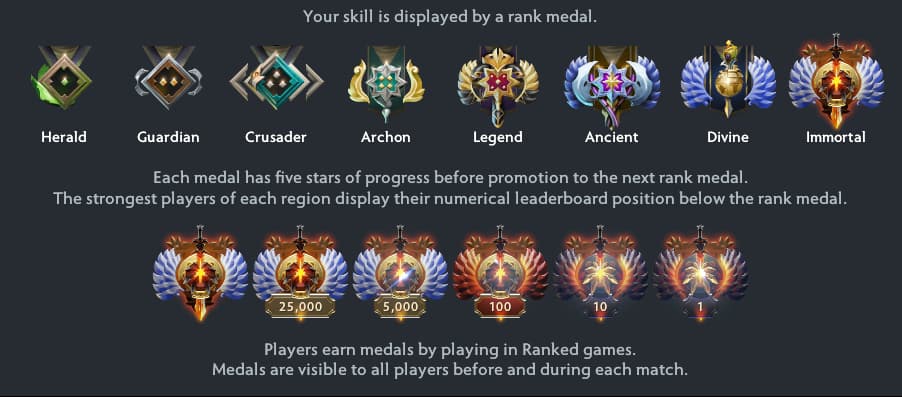
Players who have not gone through the calibration process will have an “Uncalibrated” rank. This rank is displayed with a huge question mark, since the game isn’t sure of where these players belong in the ranked ladder.
The system needs more information on where you belong, so it needs you to play a series of ranked matches where it can analyze how well you perform.
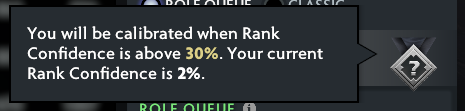
The calibration system revolves around the idea of Rank Confidence. Rank Confidence represents how certain the system is that your current Dota 2 MMR matches your real skill level. It is displayed as a percentage from 0% to 100%. Remember that you can’t gain Rank Confidence in Dota by playing unranked games. It’ll only go up as you play ranked games.

If you’re uncalibrated, your Rank Confidence will be low, since the game barely has any data to work with. You can gain more rank confidence after every ranked match you play. To complete calibration, you must reach at least 30% Rank Confidence.
To calibrate, all you need to do is queue and play ranked matches while you’re still in the uncalibrated state. If you win matches, your potential MMR gets higher, and if you lose, it gets lower.
These games matter a lot, as each calibration game is essentially worth three or four regular ranked matches. The stakes are high, as wins and losses during calibration can heavily swing your projected MMR. So, be sure to try your best and play your comfort heroes.
As mentioned earlier, you’ll have to reach 30% Rank Confidence to finish calibration. There isn’t a fixed number of games you have to play – it depends on how fast your Rank Confidence progresses.
However, in most cases, each match you play contributes to 1% to 3% Rank Confidence, depending on how consistent you’ve been playing. It’s safe to say that the calibration process generally requires around 20 ranked matches to complete.
If you’re a new player and have never played ranked matches, you obviously won’t have a default rank. Dota uses initial calibration matches to estimate your starting skill level in the Dota 2 ranking system.
This means that some players might start off as Herald, while others might already start at Legend – all of which are based on their performance throughout these calibration matches.

That is why it’s best for new players to have a good understanding of how to play Dota 2 before they start the calibration process. You can always play unranked game modes to hone your understanding before jumping into ranked.
To unlock your first calibration in Dota 2, you must first meet the ranked eligibility requirements. These requirements are:
Once you’ve unlocked ranked matchmaking, you will automatically enter the calibration matches when you start playing ranked matches. From that point on, until you are assigned a rank, all of your matches count towards your calibration progress.
During first-time calibration, the game doesn’t have much data on your account due to the limited ranked matches. Though nothing is confirmed by Valve, the community generally believes the system assigns you to a “Hidden Dota 2 MMR” based on your performance in unranked matches, which is where you will be placed for your first calibration game.
Each ranked match you play helps the system learn where you belong on the ladder. For first-time calibration, you might see yourself jumping across various medals after winning or losing – this is completely normal, as the game is just placing you into different brackets to see how well you perform on each.
After every match, your Rank Confidence increases, and once it reaches the 30% threshold, the game will award you with a starting medal, and your MMR value will be visible.

Once you have this medal on your profile, ranked matches will become less volatile as you will fall into regular progression.
The calibration in Dota 2 process isn’t only available to new players. Even if you already have a rank, you can still re-enter the calibration state through recalibration. When this happens, your medal turns into the uncalibrated medal, and your ranked matches once again act as evaluation for your new rank.
If you’re wondering, “How does recalibration work in Dota 2?” it doesn’t give you a completely fresh start like first-time calibration – instead, it uses your previous rating as a starting point.
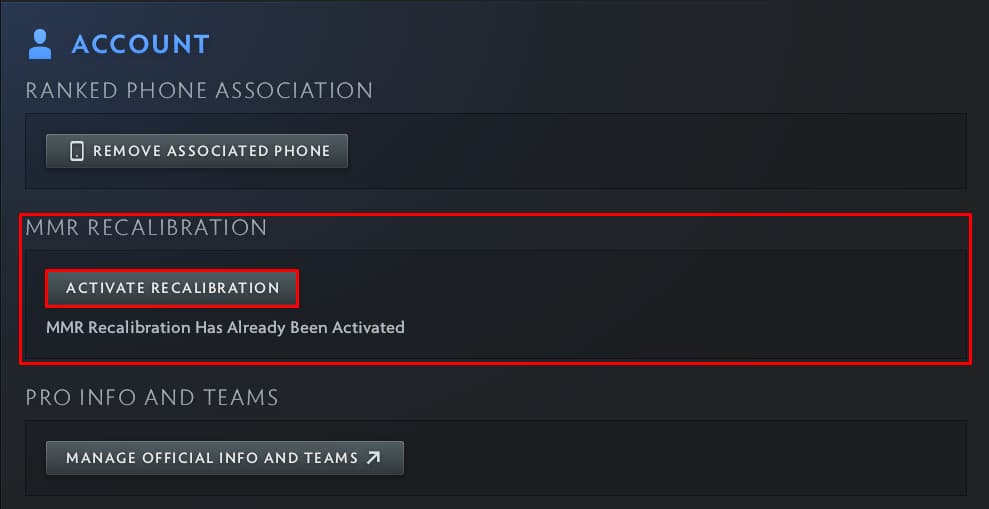
You can manually reset your MMR in Dota 2 by going into manual recalibration. Every player can trigger recalibration once every 365 days, where they can re-enter the calibration phase.
To enter manual recalibration, follow the steps below:

Once you hit “Activate Recalibration,” your medal disappears, and your Rank Confidence goes down to 0%. So, how many games it takes to recalibrate in Dota 2 depends on how quickly your Rank Confidence moves. Then, your upcoming ranked matches are treated as placement games again.
If you feel like you deserve a higher rank, you can prove it by recalibrating and getting accelerated progress if you play well. However, in reality, most players don’t see much of an increase or decrease after recalibration.
Another way to enter the uncalibrated phase is by simply not playing the game. When you stop playing ranked matches, your Rank Confidence will gradually decrease, because the system doesn’t have any recent match data to rely on.
If your Rank Confidence goes below 30%, you will become uncalibrated, meaning your rank and MMR disappear. You’ll have to play ranked matches to recalibrate again.
In this case, the number of matches you must play depends on how low your Rank Confidence has fallen. If your confidence only dropped to 25%, then you only need to play two or three matches to receive your rank again. Once the process is complete, you can grind Dota 2 MMR normally again.
As long as your Rank Confidence hasn’t dropped too far, you won’t see a huge change from your previous MMR.
Since we now understand that calibrations carry more weight than a regular ranked match, it’s important to play to the best of your ability during these placement games. One of the best ways to increase your chances of winning is to select the right hero. Though there is no specific “best hero” to play while calibrating, here are a few suggestions to get you started.
It is an unproven myth that the game takes your statistics during calibration games. Many community members believe metrics like kills, deaths, assists, and hero damage are counted.
So, selecting heroes that can farm easy assists, avoid deaths, and deal hero damage with ease are generally preferred if you want to follow this approach. Some suggestions include:
These heroes have abilities that allow them to get easy assists, as well as escape mechanisms to avoid unnecessary deaths. Some of these recommendations are also the easiest heroes in Dota 2.
In my opinion, securing wins is better than padding stats, and the best way to increase your chances is to play your comfort heroes. These are the few heroes that you have mastered, giving you your best shot at winning games consistently.
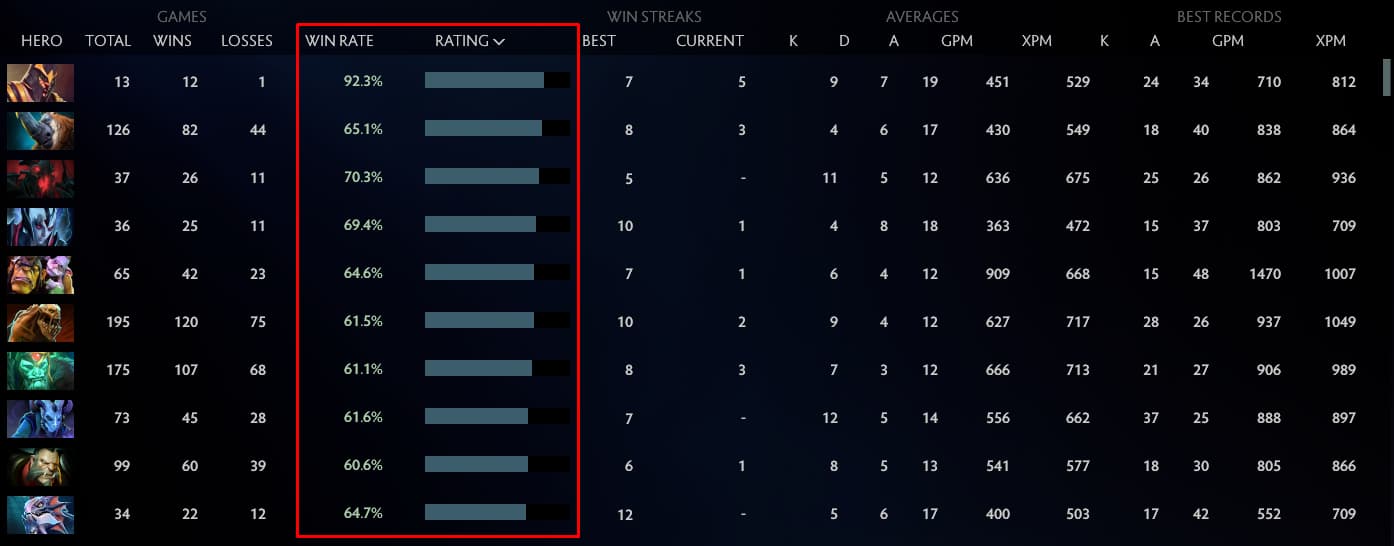
Comfort heroes can be your favorite heroes, or ones you have an incredibly high win rate on. You head over to your Hero Stats and see which heroes you’re successful on.

The final way to approach your hero pool for calibration is to pick meta heroes. Meta heroes are the most popular picks, largely because they were buffed in the most recent Dota 2 patch. To track meta heroes, take a look at what professional players are picking in tournament matches, or visit websites like Dota2ProTracker.
Choose a hero that has a strong win rate, but make sure you’re also familiar with playing the hero. Do not force meta picks in calibration matches if you’ve never played the hero before.
And stay up to date on all the latest trends in esports
By submitting your information you agree to the Privacy Policy and Terms of Use