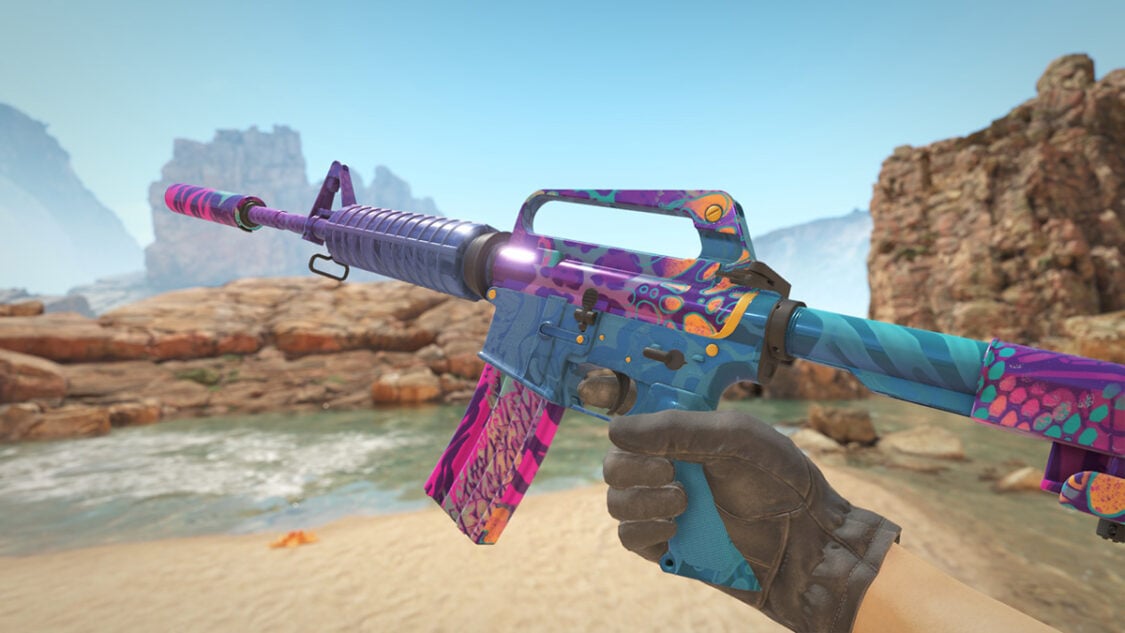






The skin economy is deteriorating rapidly, and its effects are being felt across nearly every segment of the market. Following the dramatic collapse in late October last year, when the total market capitalization was almost halved, the ecosystem showed signs of revival toward the end of December, rebounding to approximately $5.7 billion. However, since the beginning of January, the CS2 skin market has entered a slow but persistent decline, driven by several converging factors.
According to Pricempire, the overall market cap has fallen by more than 2.3% over the past seven days and 4.5% over the last 30 days. The most pronounced downturn has been observed in gloves, which have depreciated by 10–20% since the second week of January. There have been rumors circulating within the community about Windking, a famous Chinese investor and streamer. In his livestream, he announced that he would temporarily stop pumping CS2 glove prices, which has allegedly triggered panic selling, hence causing the downturn. Looking into Esportfire’s index, current glove prices have now regressed to levels comparable to those seen in November of last year.
After Windking announced during last night’s livestream that he would temporarily pause the push on 1st-gen gloves, retail sentiment quickly turned bearish.
As a result, 1st-gen gloves saw a sharp sell-off last night, which was then rapidly repaired.
However, as the news spread… pic.twitter.com/uClIVeAQ3u— LycheeCS (@LycheeCs2) January 8, 2026
Gloves, however, are far from the only assets affected. Most items, excluding older cases, are following the same downward trajectory. High-tier skins have been undergoing a steady depreciation and are down by over 10% in the past three months. Case prices, too, have largely underperformed, with the exception of legacy case batches. Playskins, which showed some resilience in early January, have also cooled off massively. CS2 knives, on the other hand, have proven relatively resilient, maintaining price stability while the overall market has spiralled into a state of weakness.
While the glove sell-off may have been catalyzed by Windking’s announcement, the broader slump across other CS2 items highlights a more systemic cause, which is the offseason lull. With few big tournaments taking place throughout most of January and even the rostermania failing to generate sustained excitement, overall interest in the game has waned. This cyclical apathy has been a familiar pattern within the skin economy and has often caused these temporary market contractions.
To note here, this downturn is not a cause for alarm. Historically, the CS2 skin economy has demonstrated a strong tendency to recover once the competitive calendar resumes. Prices typically begin to rebound in February, followed by a more pronounced upward trend during April and May, as tournament activity returns in full force.
But once again, it is worth reiterating that skins are not designed to be traditional investment drivers. The market crash in October has been a subtle reminder of the same. But with that said, for those who monitor price movements closely, certain opportunities may still exist. Some CS2 cases, especially the ones released between 2016 and 2020, appear undervalued at present and have shown an increase in price as the year progresses. Likewise, select playskins have cooled significantly and may be worth looking into to capitalize on cyclical dips.
And stay up to date on all the latest trends in esports
By submitting your information you agree to the Privacy Policy and Terms of Use