





It’s been nearly a month since Dota 2 7.40c dropped alongside the newest hero Largo, and I personally have spent quite a handful of role queue tokens experimenting with many of the different builds that have come out of the patch.
I’ve since zeroed in on three specific builds that have either brought me success which I’ll be detailing in this collection of condensed guides, if you will.
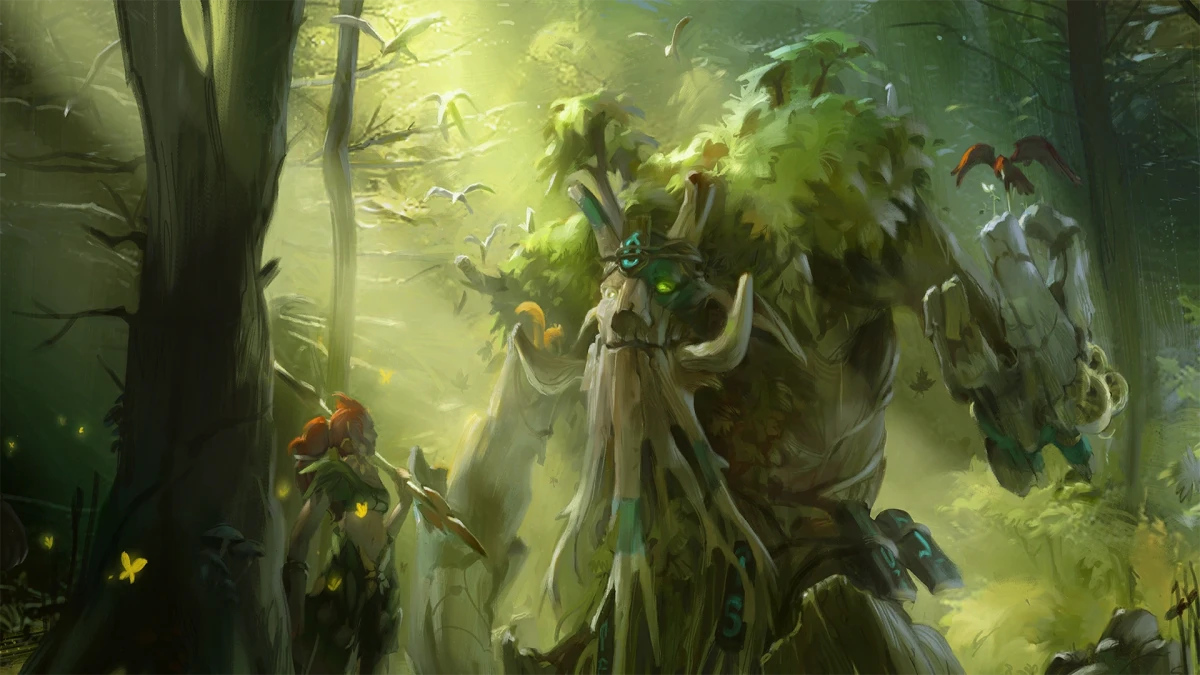
Easily the biggest head-turner of 7.40 when it first came out was the significant reworks to Treant Protector. The changes immediately made everyone think about his potential as a core hero.
Leech Seed (W) now being more akin to an attack modifier than a targeted spell as it was previously means that he can play a right click-based build more effectively, especially in the laning phase where harassing with it is quite good.

But what really makes him a threat from the offlane is his new Aghanim’s Scepter upgrade.
Overgrowth (R) also becomes a steroid, granting Treant Protector bonus Strength equal to 2x his current Strength value for 16 seconds upon activation. It also gives him phased movement and gives his regular attacks 60 percent splash damage in a 300-unit radius, while also setting his movement speed to an absolute value of 345.
Essentially, when you hit R and you have Aghanim’s Scepter, your HP pool shoots through the roof, you hit like a truck and can even cleave enemy heroes down if they’re close enough together, and can’t be slowed in any way. Oh, and did I mention that it also reduces the cooldown of Overgrowth by a whole 30 seconds?
I would highly recommend against putting points into Nature’s Grasp (Q) in the laning phase, as tempting as that might be. It’s really not that great overall, although there are situations where it can be good to take a value point in it such as when your soft support picks something like Rubick or Snapfire where you can really take advantage of the slow.
You’re going to want to max Leech Seed and Living Armor (E). Living Armor in particular got giga buffed this patch, allowing Treant Protector to sustain himself in lane without the assistance of his lane partner. Nature’s Grasp is low on the priority list, so you can just shelve that until later in most games.
As for the item build, you should be going for Echo Sabre – Aghanim’s Scepter – Blink Dagger – Black King Bar – Harpoon or Assault Cuirass.
Armor is especially valuable on Treant Protector given his low base agility and agility gain. Your bonus HP from Overgrowth doesn’t mean much without armor shoring it up, after all.

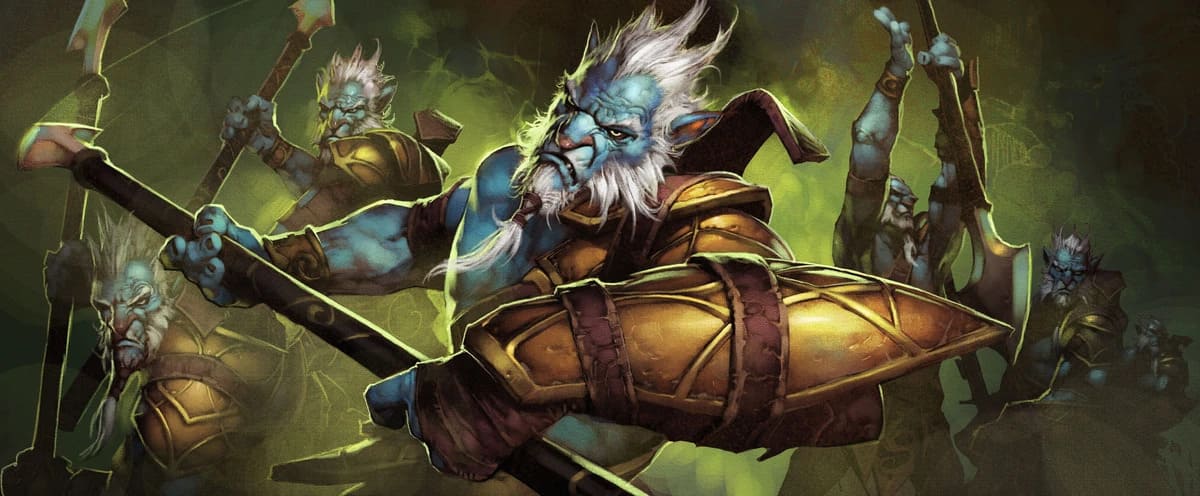
Two more heroes also got fundamental changes to their kit in Patch 7.40. Phantom Lancer gets evasion instead of bonus agility from Phantom Rush (E) now
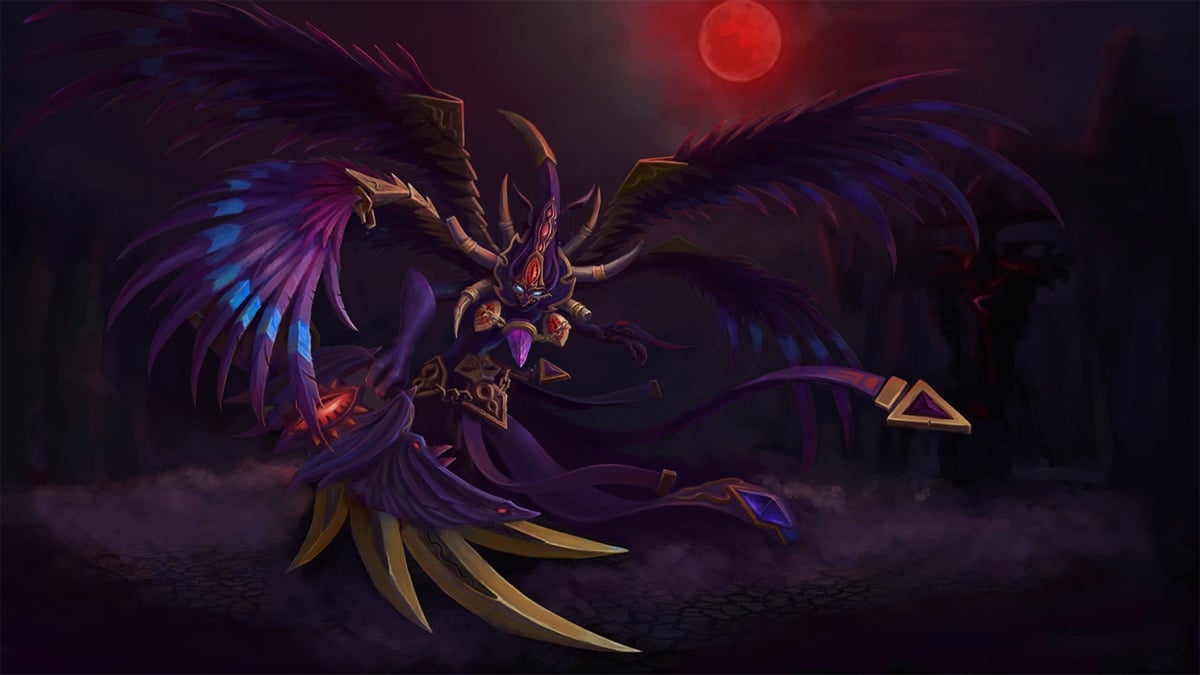
Spectre got old Haunt (R) back as her while seeing Shadow Step (W) move to the second spell slot. Also for Spectre, Desolate is now her innate ability.
Now that Shadow Step is accessible much sooner, her best build now involves rushing Phylactery instead of going Power Treads into Radiance. The fact that Perseverance builds into Phylactery is huge for Spectre, who has always been one of the worst laners in the entire game. Now, she gets the health and mana regeneration she always needed.
Once you’ve completed Phylactery, Spectre can just bully the opposing offlaner or soft support out of the lane with Spectral Dagger (Q). With the damage boost to targeted spells and the mana regeneration provided by Phylactery, she can pretty much just spam the crap out of this spell in lane, making it that much easier to go up to the creep wave for last hits.
Upon hitting level 6, things get even better. She can easily participate in an early teamfights or ganks, jumping an enemy support in order to isolate them and deal bonus damage with Desolate.
And the fun part of all of this is that you still get to play classic Spectre afterwards if you really wanted to, grabbing yourself a Radiance in order to farm and deal damage in teamfights at the same time. You’re just way more useful in the early game now thanks to Phylactery and the new Shadow Step.
The skill builds is very straightforward. For Spectre, prioritize Spectral Dagger and Dispersion, while getting a value point in Shadow Step at level 4. Grab Haunt at each ultimate level. With the Phylactery build, make sure to get the Spectral Dagger talents at levels 10 and 15.
The best level 20 talent will depend on the game state and the enemy team’s draft, but generally I tend to take +350 Health more often. At level 25, the illusion attack damage talent is always the better choice.

As for Phantom Lancer, he doesn’t buy Radiance at all, but still benefits from Phylactery in the exact same way. Spamming Spirit Lance (Q) in the lane is always great, as it helps snipe ranged creeps and harass softer targets out. Now that Diffusal Blade’s Manabreak passive no longer propagates to illusions, though, you’ll want to skip it entirely. Instead, go for Yasha – Manta Style – Aghanim’s Scepter – Shard.
The Shard upgrade is particularly good in pub games, as it adds even more confusion to a hero that already spawns a ton of illusions to discombobulate the other team with.
For Phantom Lancer, get your three basic abilities once for the first three levels, then max out Spirit Lance as you build your Phylactery. Max out Phantom Rush after that, then Doppelganger to finish it off. Get Juxtapose (R) at each ultimate level as usual.
For the talents, you’ll want the Juxtapose talent at level 10, the Spirit Lance talent at level 15, the Juxtapose damage reduction talent at level 20, and finally the Doppelganger cooldown talent at level 25.
If you’re like me and you primarily play core, here’s an easy way to farm role queue tickets. Patch 7.40 buffed Warlock’s Shadow Word (W) so that the damage and heal both affect the unit Shadow Word is attached to and units within a 225-unit radius of the “host” unit. If you’re already hearing cash register noises going off in your head, you’re on the right track.
This means that Warlock can farm as a hard support, and god knows Warlock is one of the best support heroes out there if he manages to get his hands on some juicy items like Aghanim’s Scepter or Refresher Orb.
Before you get to that part, though, you still have to play the laning phase, because your carry will complain if you don’t go through the motions.

To do this, you’ll need to take advantage of the way Fatal Bonds (Q) works. Fatal Bonds shares damage taken between units in a large area, and it lasts 18 seconds. Each link in the chain disappears upon the expiry of the associated debuff, or when one of the units affected dies. Therefore, it’s more effective on higher HP units, which in the case of hard support is usually the hard neutral creep camp closest to the enemy offlane.
If you see the enemy soft support pulling the hard camp to their creep wave, punish them hard with Fatal Bonds and a handful of right clicks, as well as Shadow Word if your carry doesn’t need the healing. This kind of hyper efficient trading creates a situation where the lane is extremely hard to interact with for your opponents, allowing your carry to hit creeps in relative peace. If the enemy pairing ever steps too far, you can typically come out with one or two kills.
Assuming everything went well enough, you should go into the mid game with a gold and experience advantage. Use this time to farm hard. Fatal Bonds and Shadow Word will be your two best friends, allowing you to stack and clear tons of creep camps and flash farm like nobody’s business.
In terms of items, you should go for Arcane Boots – Aghanim’s Shard and then your choice of a defensive item like Glimmer Cape, Force Staff, or Eul’s Scepter of Divinity. Then, heading into the late game, buy Aghanim’s Scepter and a Refresher Orb.
In a teamfight, you’re there to cast two instances each of Fatal Bonds and Chaotic Offering (R), which in most cases should be more than enough to just win the teamfight and maybe even the game if your opponents don’t have buybacks.
Conventional wisdom might have you maxing Fatal Bonds in the past, the buff to Shadow Word changes that conventional wisdom entirely.
Therefore, you’ll want to max out Shadow Word while completely ignoring Upheaval (E) in the laning phase, in order to get the most value out of this broken spell. Always remember that it’s more efficient to use as a heal, as the heal is not affected by your teammates’ magic resistance whereas the offensive version is. By level 6, you should have two points in Fatal Bonds, four points in Shadow Word, and one point in Chaotic Offering.
Max out Fatal Bonds thereafter, as it’ll be your secondary farming tool. Upheaval comes after, with each ultimate level being dedicated to leveling up Chaotic Offering.
And stay up to date on all the latest trends in esports
By submitting your information you agree to the Privacy Policy and Terms of Use