

Winning a Dota 2 match is already satisfying in its own right, but you’ll feel even better when you receive the gold MVP badge at the end of the game, too. Though the meaning of “Match MVP” is clear as day, figuring out how to get Match MVP in Dota 2 is a little bit of a mystery, since Valve has never shared the exact formula. In this guide, I’ll break down what MVP actually is and share what I know about how the system works.
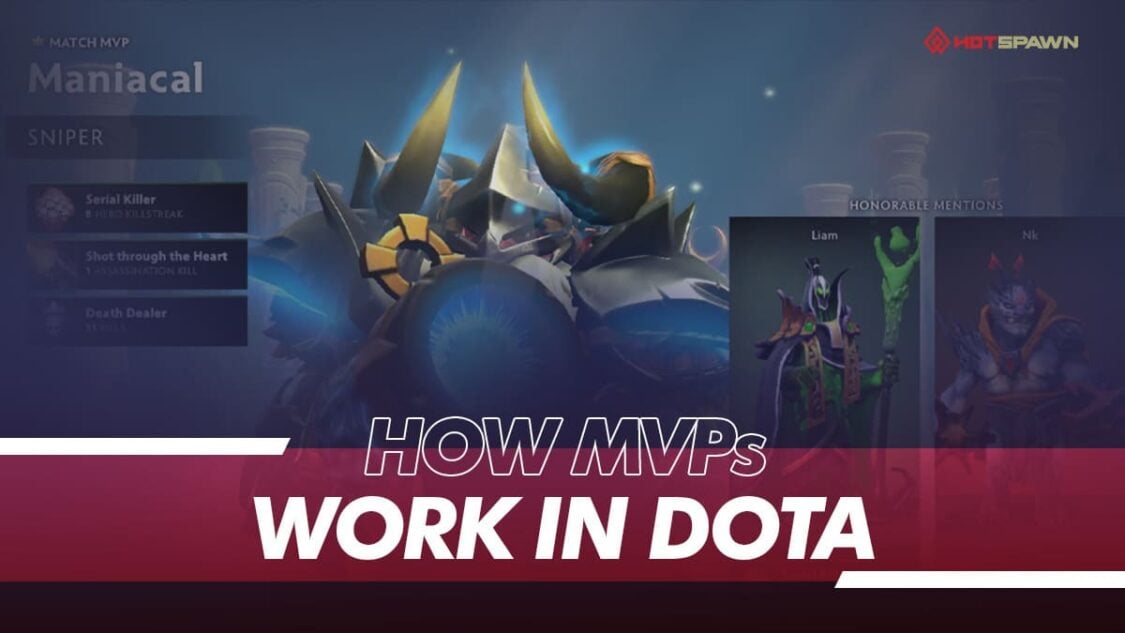
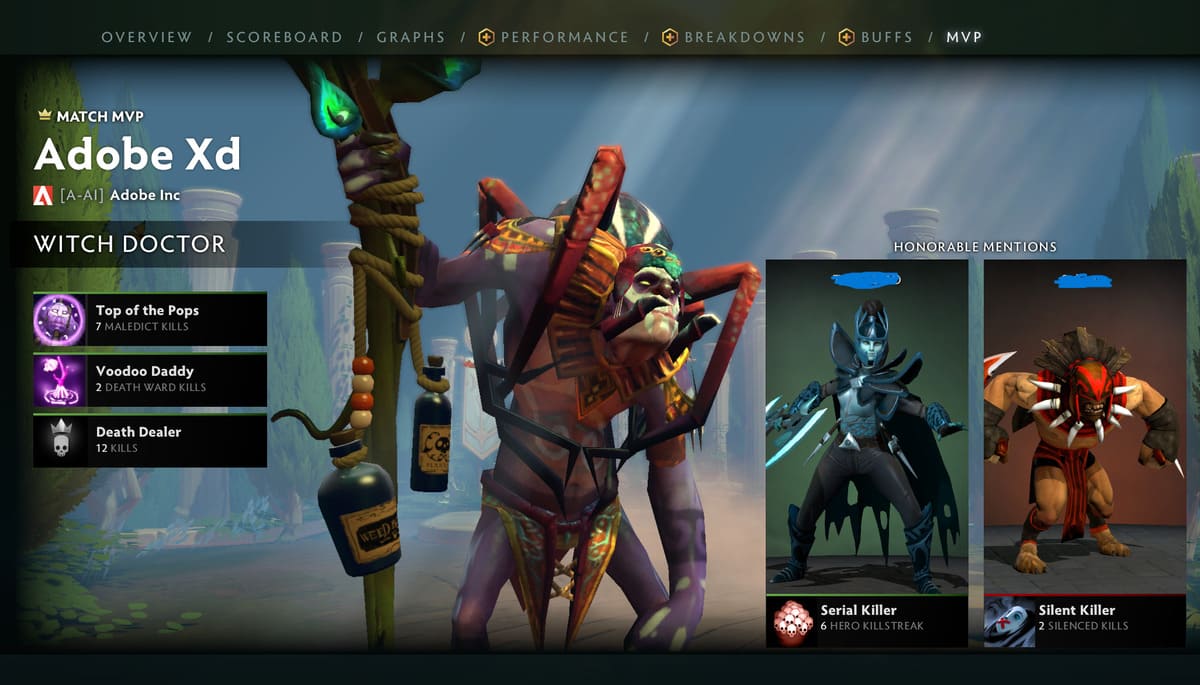
At the end of every Dota 2 match, one player is highlighted on the post-game screen as the Match MVP, where they’ll receive a golden crown for their efforts throughout the match. This is the game’s way of saying, “This was the most impactful player in the lobby.”

When you do get MVP, your hero will be displayed on the post-game screen alongside three key stat lines that summarize why you were chosen. These can vary from match to match, but they tend to cover things like:
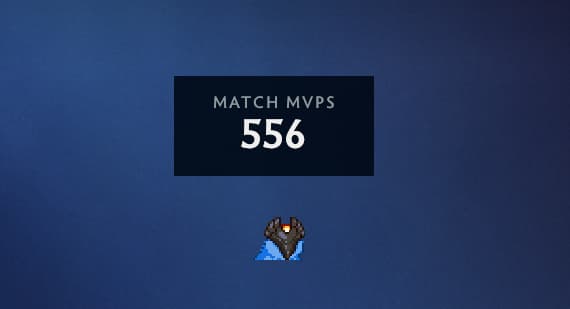
If you earn MVP in Dota, it’ll get added to your lifetime tally of match MVPs. You can show this off on your profile, as it serves as a nice flex for how often you’ve been “him” in your games.
The MVP doesn’t take up the entire screen on the post-game display. Two other players are displayed as Honorable Mentions. They’re basically the runners-up in the MVP calculation – they had high impact, but not quite enough to beat the top scorer.
Here are a few things about Honorable Mentions:
So, even if you didn’t snag the Match MVP title, landing as an Honorable Mention still means you did relatively well.
Though the MVP system sounds pretty straightforward, it actually isn’t. It’s based on a hidden scoring system that has never been publicly shared. So, sometimes, the best performer in the game doesn’t even receive MVP honors.

However, from years of personally playing the game, I’ve noticed some factors that heavily influence your chances of getting MVP.
This is the most crucial factor. The game only selects the MVP in Dota from the winning team. So, even if you go 30/0/14 on a loss, you certainly won’t be receiving that badge.
KDA is naturally a big factor. A strong KDA simply shows that you’ve gotten a lot of kills and participated in many fights without dying too much. In my experience, deaths matter most of all three.
Sometimes, me or my teammate would be going 12/1/8 as carry and die before the game ends due to fountain diving, and wouldn’t receive the MVP award. So, if you’re looking to farm MVPs, avoid any unnecessary deaths when the game is ending.
Another core piece is teamfight impact and participation. To win a Dota 2 game, you’ll have to kill enemy heroes, and being a part of many kills and fights will put you as a frontrunner in the MVP race.
Either way, participating in a lot of Dota 2 teamfights will mean your kills and assists count go up, which improves your KDA.
For some reason, Valve seems to favor heroes stunned very heavily in MVP metrics. Sometimes, these aren’t necessarily limited to stuns – other disables like roots or silences can also contribute.
This is a big reason why some support heroes feel suspiciously good at getting MVP, even though they may have a higher death count compared to cores.
There are a few more stats that do seem to matter, but generally less than the ones we’ve covered above:

From experience, there are a few heroes that just seem naturally tuned to earn MVP more often than others, for some odd reason. Here are some heroes you will very commonly see grabbing MVP, even with subpar performances.
You can ask anyone, and they’ll agree that Witch Doctor is an MVP machine.
So, in one hero, all of his spells are pretty much stacking stuns landed, damage dealt, and healing done – three big pillars of MVP scoring.
Disruptor is another hero that feels strangely favored by the MVP system.
This is a personal theory, but I believe the game calculates the distance of heroes you’ve Glimpsed. So, Glimpsing a hero who has just teleported from another lane could also add into MVP metrics.
Another surprising hero is Crystal Maiden.
Crystal Maiden is notoriously known for being one of the easiest heroes to kill. She’s slow and squishy, making her prone to dying in every fight. But, I’ve played a good amount of Crystal Maiden games, getting double-digit deaths in most games, and finding myself as the Match MVP.
So, for those of you thinking you need to play core to get MVP, you might be wrong. In fact, the system often rewards support heroes, as shown above.
And stay up to date on all the latest trends in esports
By submitting your information you agree to the Privacy Policy and Terms of Use