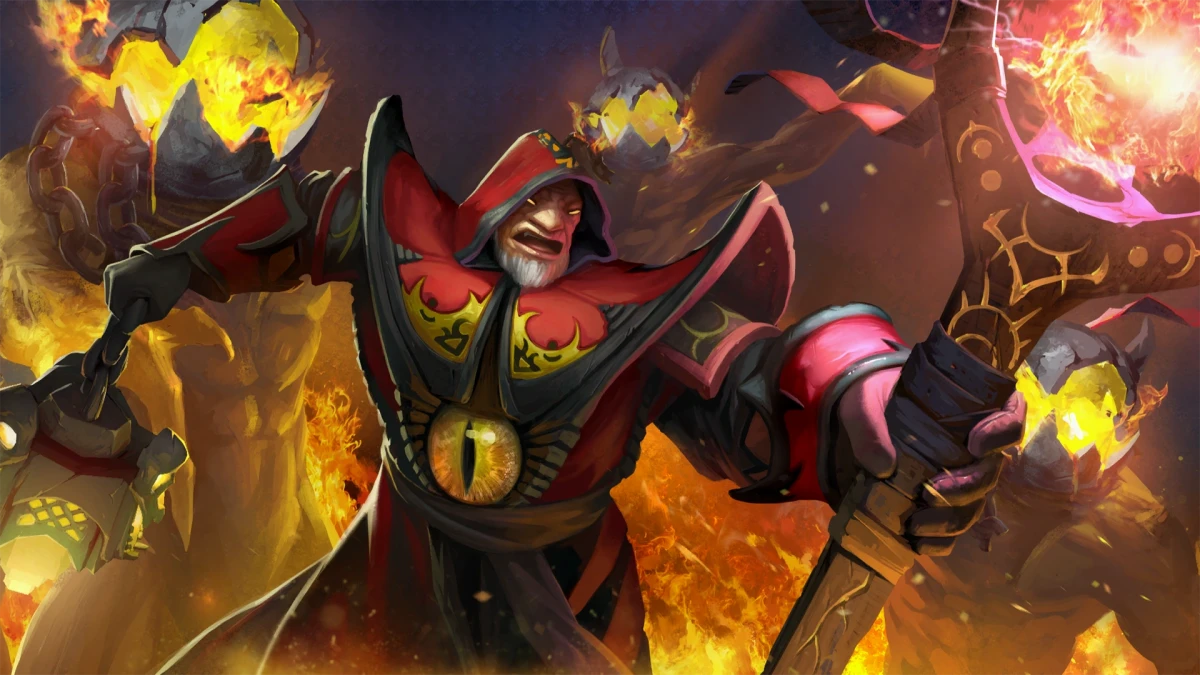
Dota 2 gameplay is all about teamwork and strategy, and with each team having five players, it’s easiest to divide expectations by using clearly defined roles. That’s why Dota 2 players are assigned to individual roles to help them understand their responsibilities and keep teamwork structured. In this guide, I’ll go over all roles in Dota 2 and what you need to know.
What Are The Roles in Dota 2?
In Dota 2, each team is made up of five players, and before the game starts, everyone fills a specific role that helps the team function as a unit. It’s just like building an engine – each part has a job that contributes to running it.
Dota 2 (Image via Valve)
The five roles are typically divided into two groups, which are Cores and Supports. Cores are meant to farm gold and buy items to scale into the game, while Supports are meant to enable them.
These roles exist because Dota 2 is a game built around limited resources. There are only so many creep waves and camps on each side of the map that not everyone on the team can farm gold at the same time. That’s exactly why these roles are divided by farm priority.
Here are the structured roles in Dota 2:
Position 1 / Safe Lane (Carry)
Position 2 / Mid Lane
Position 3 / Off Lane
Position 4 / Soft Support
Position 5 / Hard Support
These roles are ordered by farm priority, with Position 1 requiring the most gold, and Position 5 needing the least.
This also determines how lanes are typically formed. The Safe Laner is usually paired with the Hard Support, while the Offlaner is matched with the Soft Support. The Midlaner is the only player who will lane alone.
Each Dota 2 Role Explained
Now that we’ve gotten a grasp of how roles work in Dota 2, let’s dive into each one with more detail. Here is what is expected from every player on the team.
Position 1 (Carry)
Carries are for players who want to be the main character. As the role’s name suggests, Carries are responsible for putting their team on their backs and closing out games.
Heroes in this role are typically very weak in the early game, but will become monsters in the late game. However, to get to this point, they need farm and space on the map to complete their items.
Carry heroes have a difficult time farming in the early game, which is why they are sent to the safest lane for the laning stage.
What Do Carries Do?
Carries are expected to survive the early game. Heroes in this role are typically weak in the lane, so the primary goal is to get out of the laning stage with as much as possible. This means avoiding deaths and getting as many last hits as possible.
Image credit: Valve
Next, they are tasked to farm their core items. Carry heroes are late game monsters, but they need items to become that. Normally, Carries will buy a farming item, which is an “investment” to obtain bigger items later on. In this phase, they are focused on farming and scaling.
Once the first two or three items are completed, Carries are strong enough to begin fighting – in other words, they come “online.” This point, usually around the 30-minute mark, is when Carries can start grouping up with the team and looking for fights.
The whole team has spent the last 30 minutes making space for the Carry, so it’s time for them to return the favor. Carries are expected to deal damage and win fights for the team. After successful fights, they take objectives like towers and Roshan to eventually close the game.
What Items Do Carries Buy?
Every Carry hero has different toolkits and playstyles, but most of them follow a similar item path. First, they start off with a farming item to accelerate their gold gain. Then, they invest in a mixture of damage and survivability items to become a real threat on the map.
Farming Items
Most Carry heroes have a difficult time farming with their raw stats and abilities, which is why they buy a farming item to increase their GPM.
Some of the most common farming items include:
Battle Fury
Maelstrom / Mjolnir
Radiance
It’s worth noting that some heroes have built-in farming tools, like Sven’s Great Cleave or Slark’s Dark Pact, which is why they don’t necessarily need to buy a farming item.
Damage Items
Like we’ve heavily emphasized earlier, Carries are responsible for high damage output in the later stages of a game. To accomplish this, they need to buy items that let them deal more damage:
Daedalus
Monkey King Bar
Desolator
Bloodthorn
Abyssal Blade
Nullifier
Survivability Items
Having tons of damage is one thing, but actually being alive to deal that damage is another. Carries hold the highest amount of gold on each team, which is why they become high-priority targets in fights. So, investing in items that help them survive is crucial:
Manta Style
Sange and Yasha
Black King Bar
Butterfly
Satanic
Linken’s Sphere
Assault Cuirass
So, if you’re playing Carry, you need to think about striking a good balance between damage and survivability items.
Best Carry Heroes to Play
Here are some Carry hero recommendations to get you started:
Split-Push and Farming Carries: Terrorblade, Anti-Mage, Naga Siren
Late Game Hyper Carries: Medusa, Spectre, Gyrocopter
Position 2 (Mid)
The Mid player is often considered the anchor of the team. This role is arguably the most important one among the five, as they are expected to be strong and relevant throughout every stage of the game.
Mid is the only solo lane in the game, which means Position 2 heroes gain solo experience and progress in levels much quicker than everyone else. That means they have very high levels in the early game and become a massive threat on the map. That is why they are also expected to help out other lanes by ganking and rotating.
Midlaners need to dictate the tempo of the game. They are the strongest heroes on the map before the carries come online, so they decide when team fights happen (since they always need to be present). They are also expected to become reliable damage dealers before the Carry is fully online.
What Do Midlaners Do?
Midlaners need to try and win their lane. It’s a 1v1 matchup, where skill and hero matchups play a major role in the outcome of the lane. If a Midlaner wins the lane convincingly, they’re putting themselves in an extremely strong position, and at the same time, they are minimizing the impact of the enemy Mid player.
Image credit: Valve
Mid players will then have to control the tempo of the game. They are given solo experience and are often the strongest hero on the map. So, they need to decide when to fight, farm the map, pressure, or rotate. All of this results in creating space for the carry. Since the carry will likely still be farming, Mid players are responsible for forcing fights and ganking other lanes to draw attention away.
However, I believe the most important task for the Midlaner is to stay relevant. They need to be strong at every point of the game. They cannot simply dominate the early game, then fall off in the mid or late game.
What Items Do Midlaners Buy?
Unlike other roles where builds are pretty straightforward, Midlane builds are the most volatile in Dota 2. You can buy almost anything in this role. However, to make things easier, we can narrow Mid items down into a few key categories.
Tempo Items
As we’ve discussed, Mid is mostly about tempo. Here are some items that help Mid heroes snowball the game:
Spirit Vessel
Witch Blade
Blink Dagger
Orchid Malevolence
Phylactery
Survivability Items
Despite having level advantages, Mid laners aren’t immortal – in fact, most of them are actually quite squishy. Just like carries, they need to be alive to contribute to fights, which is why survivability items are also important:
Eul’s Scepter of Divinity
Linken’s Sphere
Black King Bar
Manta Style
Aeon Disk
Utility Items
Mid players can also buy non-damage items that can benefit themselves or the entire team. These items pretty much help them become more useful without directly dealing damage. Some of these items are actually extremely important for Mid heroes:
Scythe of Vyse
Blink Dagger
Force Staff
Shiva’s Guard
Octarine Core
There are many different items that can benefit Midlaners, so you’re free to mix and match them based on what your hero or team needs.
Best Mid Lane Heroes to Play
Active Playmakers: Ember Spirit, Storm Spirit, Puck, Queen of Pain
The Offlaner is pretty much the backbone of the team. They are usually tanky and built to start engagements. Instead of dealing the most damage, Offlaners focus on creating chaos and giving their team the structure needed to pull off a successful fight.
Image credit: Valve
Position 3 heroes play in the hardest lane on the map, as their towers are far away from the lane. However, heroes in this role are often strong in the early game, which makes up for the tower disadvantage. They typically have the strength to bully enemy carries and make their game as difficult as possible.
There is a common misconception about Offlaners. Most people think they are simply there to “tank” and absorb damage. But, the real way to play Offlane is to either purchase aura items to make the entire team stronger, or play for initiations. Frequently, you’ll do both.
What Do Offlaners Do?
Offlane heroes are generally strong in lane. They have high health, decent damage, and spells that allow them to bully enemy Carries. Their main job in the laning stage is to apply as much pressure as possible, delaying the enemy Carry’s early timings.
There are two primary ways to play Offlane. You either purchase aura items like Pipe of Insight and Crimson Guard to make your entire team tankier, or you focus on starting fights by buying items like Blink Dagger.
The Offlaner’s main job in the early to mid game is to put themselves on the map and be known. This includes pushing up waves or sitting in front of towers to defend it. Since they are typically difficult to kill, enemies must spend lots of resources and time if they want to attempt ganking them. This positioning is all part of making space for the Carry. In other words, Offlaners need to take “risky farm,” which often involves having to show themselves on the map.
Offlaners are then tasked to become the frontliners. They are usually the tankiest hero on the team and need to stand in front during fights. Offlaners can also buy Blink Daggers to get in front of the enemy team’s faces, allowing the rest of the team to follow up.
They control teamfights, from stuns and crowd control, to keeping the team healthy with aura items. The goal is to let your Carry and Mid players deal damage for you, while also protecting the Supports in the backline.
What Items Do Offlaners Buy?
Offlaners usually focus on a mix of utility, durability, and teamfight control rather than raw damage. Their builds are catered to helping the entire team survive and take better fights.
Initiation Items
Most Offlaners are given the role of initiating fights. These heroes typically have area stuns, which is why items like Blink Dagger help them land their spells reliably. Heroes that go for this route are typically “Blink Stun” heroes, as in Blink Dagger into the fight and use their stun.
Blink Dagger
Force Staff
Shadow Blade
Aura and Utility Items
Offlaners are also responsible for absorbing damage – but not only for themselves. The entire team also needs help tanking damage, which is why many heroes in this role purchase aura items.
Pipe of Insight
Crimson Guard
Guardian Greaves
Vladimir’s Offering
Tank and Control Items
After getting a mix of initiation and aura items, Offlaners continue focusing on tanking and controlling fights. These items reduce the enemy team’s offensive capabilities while also buffing the rest of their teammates.
Lotus Orb
Shiva’s Guard
Heaven’s Halberd
Assault Cuirass
These items allow Offlaners to start fights, protect their team, and stay alive long enough to provide control of the battlefield.
Best Off Lane Heroes to Play
Reliable Teamfight Initiators: Axe, Mars, Dark Seer
Now, we’re diving into Support territory. Each team consists of two Support heroes, with the first one being the Soft Support. The Soft Support is essentially the team’s secondary playmaker, behind the Midlaner. They are tasked to make active and aggressive plays in the early games, ensuring all lanes are in check.
Image Credit: Valve
Soft Supports start in the Off Lane alongside the Offlaner, but they are not meant to stay there permanently. Soft Supports need to look for opportunities to gank side lanes, secure runes for the Midlaner, and disrupt the enemy’s game.
As the game goes on, the Soft Support becomes a secondary initiator and controller in fights. So, they’re pretty much patching the team’s holes. They are very flexible, and can do things such as start engagements, catch enemies, save teammates, or become that second “Blink Stun” hero.
What Do Soft Supports Do?
Soft Supports are expected to roam and gank. They should not stay idle in the Off Lane throughout the entire laning stage. Soft Supports leave their lane to help Midlaners secure the Power Rune, and gank other lanes.
This activity isn’t limited to the early game. Soft Supports are responsible for setting up plays for the team throughout the entire match, meaning they need to constantly be moving around the map. They usually stick with the strongest Core hero on the team (usually the Midlaner or the Offlaner) and help them secure kills.
Soft Supports also need to do Support duties like buying detection and controlling vision. This means they also need to place ward and deward key areas. Some heroes also need to buy items like Glimmer Cape and Force Staff to keep the team protected.
Overall, Soft Support players need to be very active and have great map awareness. They are expected to be present for almost every teamfight or skirmish, as heroes fit for the role are equipped with low-cooldown abilities that can contribute to fights.
What Items Do Soft Supports Buy?
Soft Support heroes have tons of flexibility, and item builds really depend on the hero. However, they tend to buy items that enable the team, whether it’s additional initiation, auras, or control.
Mobility and Initiation Items
Soft Supports need to be everywhere on the map, so buying items that make them mobile helps a lot.
Blink Dagger
Force Staff
Drum of Endurance
Utility and Control Items
Soft Supports have to be present in most fights, and buying items that provide utility and control are always helpful in small skirmishes or full-on teamfights.
Eul’s Scepter of Divinity
Spirit Vessel
Rod of Atos
Scythe of Vyse
Survivability Items
Heroes in this role typically have spells on low cooldowns, so it’s important for them to get multiple rounds of spells in a single engagement. Surviving is crucial, so buying items to help them survive is highly recommended.
Aeon Disk
Lotus Orb
Ghost Scepter
Glimmer Cape
Overall, Soft Support item builds are very flexible. Again, you’re pretty much focusing on patching holes on the team, depending on what the team is missing, or what your hero has to offer.
The Hard Support is the foundation of the team. This role involves doing the “dirty work” and sacrificing themselves to enable the team. Playing Hard Support is selfless, strategic, and most players in the role don’t get appreciated as much as they’d hope, but without the Hard Support, no team can function properly.
Image credit: Valve
Hard Supports usually lane with the Carry in the Safe Lane. Their job is to babysit the Carry by protecting, healing, and securing them. They pull camps, buy regeneration, trade with enemies, and make sure their Carry gets through the laning stage.
What Do Hard Supports Do?
The Hard Support’s primary job in the early game is to protect the Carry. This includes harassing enemy laners and feeding them with regeneration items. Protecting them can also extend to tanking ganks or damage for them.
One of the Hard Support’s main tasks is to provide vision for the team. They must purchase wards, sentries, and smokes throughout the game. Position 5 players need to have a good understanding of how to play around vision to keep the team protected.
Hard Supports have the lowest farm priority in the game – most of the time, they won’t even get any opportunity to farm. They need to give available gold and experience to cores, which can also include stacking neutral camps.
Saving teammates is another responsibility Hard Supports must bear. This includes tanking smoke ganks or using spells and items to prevent team deaths.
What Items Do Hard Supports Buy?
Hard Supports almost always focus solely on defensive and team-saving items over offensive ones.
Save and Utility Items
The most common items you’ll see on Hard Supports are items that save or buff teammates.
Glimmer Cape
Force Staff
Solar Crest
Guardian Greaves
Control and Vision Items
When playing Position 5, you’ll spend thousands of gold on buying vision items, so be prepared to buy the following over and over again.
Observer and Sentry Wards
Smoke of Deceit
Dust of Appearance
Gem of True Sight
Defensive Items
Hard Support lives matter, too. Sometimes, buying defensive items is also necessary to be able to get spells off in teamfights.
Ghost Scepter
Aeon Disk
Remember, you’ll barely get any farm as a Hard Support, so items can be very difficult to obtain.
This guide should give you a clear picture of what to expect from each role in Dota 2. It’s hard to master all five roles, so you generally want to stick to two of them at a time.
Article Tags
No tags found
Tournaments
No tournaments found
Owen H
Dota 2 writer
Owen is as competitive as it gets, choosing to play the holy trinity of Dota 2, CS2 and Valorant with a primary focus on the former. He peaked at 8,500 MMR in Dota 2 and follows the professional scene religiously. You can still catch him as a regular on the Southeast Asian leaderboards.