The evolution of Russian Counter-Strike: From Dosia to donk
Saumya Srijan
|
Share:
From the early days of CS:GO, Russia’s journey through the ranks of professional esports seemed like an inevitable struggle against the momentum of established powers. But over the years, the Russian scene slowly, persistently, shaped itself into a force that is reckoned with. What began with underdog teams and isolated victories has evolved into a scene rich with talent, ambition, and the weight of a legacy that cannot be denied.
This is the chronicle of how Russia’s impact in the scene has changed the face of Counter-Strike forever. This is how what started with Dosia, is still living in players like donk. This is the legacy of Astana dragons has turned into the accolades of Team Spirit. This is how Russian Counter-Strike has evolved through the years.
It started with three
The footprints of Russia in tier-one Counter-Strike has been integral since the early days of CS:GO, even if they were few and far between. As far back as the first Major DreamHack Winter 2013, Russian names were already carving their place in history. Dosia and kUcheR, playing for Astana Dragons, were among the first Russians to win a game at a Major. Alongside them, seized and TonyBlack represented a NAVI that was otherwise filled with Ukrainians. Astana Dragons finished in the 5th–8th bracket, while NAVI could only manage a 13th–16th finish. But this was just the story of the first Major.
Before the second Major, EMS One Katowice 2014, HellRaisers burst onto the scene by picking up most of the Astana Dragons lineup. But the placement for both Hellraisers and NAVI stayed the same. Meanwhile, dAT team emerged with a promising roster full of young talent ub1que, WorldEdit, flamie, B1ad3, and bondik.
At ESL One Cologne 2014, all three teams, NAVI, HellRaisers, and dAT qualified for the Major. NAVI made it to the quarterfinals, HellRaisers finished 9th–12th, and dAT placed last. By DreamHack Winter 2014, both NAVI and HellRaisers cracked the top four. But this is how the story started for Russian Counter-Strike. In a scene dominated by Polish, Swedish and French teams, these three teams constituting of Russian and Ukrainian outliers were forcing their way into the spotlight.
Astana Dragons => HellRaisers => Gambit
dAT Team => FLIPSID3
In February 2015, FlipSid3 signed the core of the dAT team, adding Ukrainian legends markeloff and a rising star by the name of s1mple. flamie, who wasn’t signed by FlipSid3, went to HellRaisers. But tensions were bubbling under the surface. After a string of poor results, s1mple announced his exit in October, famously stating he wouldn’t play with certain teammates again. He was replaced by DavCost, an 18 years old Russian AWPer. Yet, the result at ESL One Katowice 2015 remained unchanged as they secured a last-place finish. HellRaisers met the same fate, and NAVI bowed out in the quarterfinals again.
Image via PGL
The breakthrough came at DreamHack Open Cluj-Napoca 2015. NAVI, powered by two Russians, two Ukrainians, and one Slovak, reached the Major Grand Final, ultimately falling to Envy. While they fell short just by a step, the message they delivered was loud and clear. The rise had begun.
The year 2016 noted several changes. NAVI added flamie, moving starix to coach the team, to further bolster the firepower. FlipSid3 hedged their bets on a young electroNic, who would go on to become a pillar for NAVI after his transfer in the following year. NAVI, still evolving, made another final at MLG Columbus 2016 with flamie. But, very quickly, the trio of dAT, Astana Dragons, NAVI had become FlipSid3, Gambit, and NAVI.
Team
Roster
NAVI
seized, Edward, Zeus, GuardiaN, flamie
FLIPSID3
Markeloff, Bondik, B1ad3, Davcost, WorldEdit
Hellraisers
Dosia, kUcheR, mou, AdreN, ANGE1
Gambit’s golden hour
Gambit’s journey began with Dosia, mou, and WayLander, and was soon reinforced by the arrival of hooch and AdreN at the start of 2016. But the team wasn’t exactly setting the world on fire. Their campaign at MLG Columbus 2016, the first Major of the year, ended with a 9th–12th place finish. Not long after, internal struggles led to changes in the roster, with WayLander left to fend for himself.
Image via PGL
Following another disappointing run at ESL One Cologne 2016, Gambit hit the reset button once again as more roster changes ensued. But the big came later that year, when the roster was bolstered by HObbit, who arrived with the highest buyout ever paid in the CIS region at $100,000, and Zeus, who had recently parted ways with NAVI. By the end of 2016, the squad featured only one Russian player Dosia, who had Zeus, AdreN, HObbit, and mou at his disposal.
Teams (2016)
Roster
NAVI
seized, Edward, Zeus, GuardiaN, flamie
FLIPSID3
Markeloff, Bondik, B1ad3, Davcost, WorldEdit
Hellraisers
Dosia, kUcheR, mou, AdreN, ANGE1
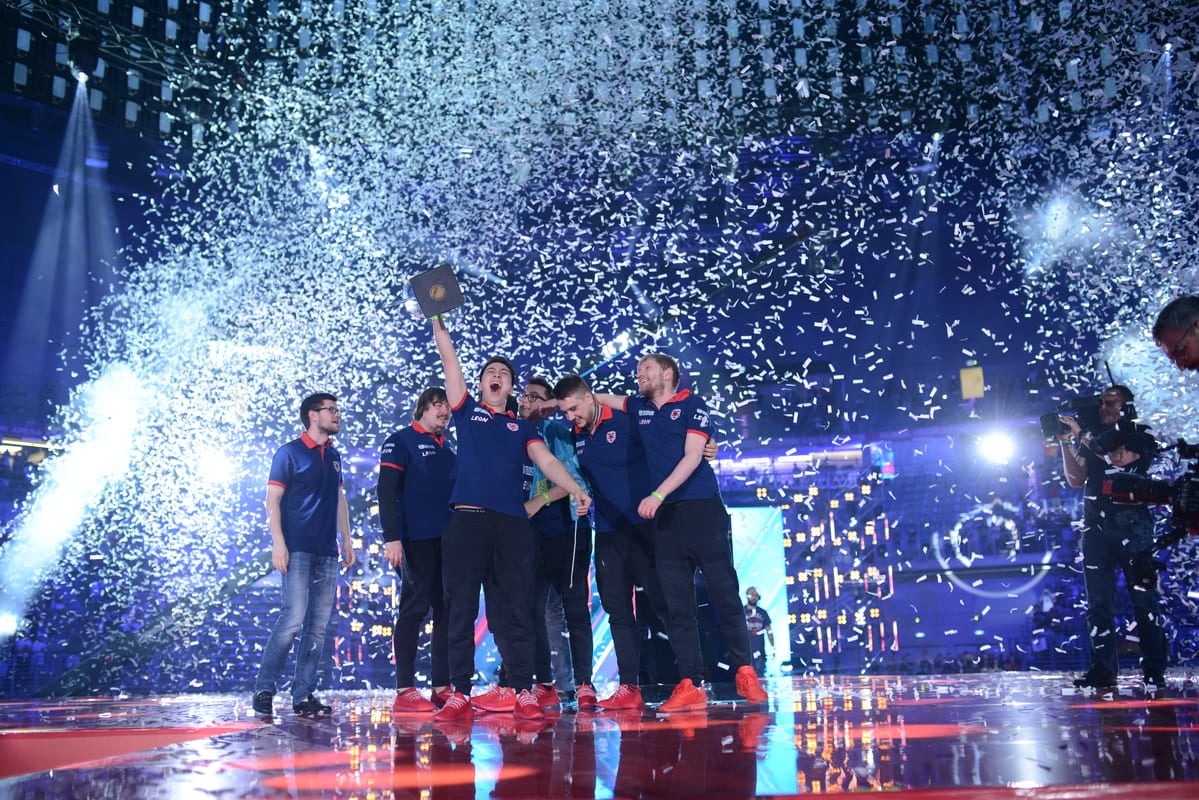
In the next year 2017, Gambit started to find its footing. Though they finished 5th–8th at the ELEAGUE Major 2017, getting knocked out by fnatic, they still outperformed FLIPSID3, while NAVI also placed the same as them. But it was at the PGL Krakow Major 2017 where Gambit truly stunned the world.
Against all odds, they blazed through the bracket, taking down MOUZ, G2, Virtus.pro, fnatic, Astralis, and finally Immortals to win the Major.
Dosia became the first Russian to lift a CS:GO Major trophy, a monumental achievement for the region.
However, not long after the success, a rift emerged between Zeus and the rest of the team regarding the removal of their coach, Kane. And just months after their Major win, Zeus left Gambit. He was briefly replaced by fitch, and later by seized, who had been benched from FlipSid3. But the magic was gone.
The Second Generation of Russian Talents
While the old guard was fading, a new wave of Russian talent was on the horizon. This “second generation” started to gain traction in 2018. Jame, a young AWPer making waves in the CIS scene, was picked up by Avangar, a team primarily composed of Kazakh players. Vega Squadron also had picked a lineup featuring keshandr, chopper, mir, and hutji. Meanwhile, Boombl4 was grinding his way up with Quantum Bellator Fire.
Image via PGL
At the ELEAGUE Major 2018, QBF shocked the world by reaching the top 8, taking down Virtus.pro, Gambit, and MOUZ before finally falling to NAVI. NAVI went on to defeat QBF, only to fall to FaZe in the semifinals. QBF’s underdog run caught the eyes of many, and shortly after, their roster was acquired by Winstrike. They made another Major appearance but bowed out in last place.
Meanwhile, NAVI made it to the Grand Finals of FACEIT Major 2018, only to be swept by the dominant Astralis. Vega Squadron also faltered, finishing 12th–14th. But this wasn’t the end, it was only the beginning.
The second generation of Russian crops had more to give and the talent pipeline was bursting at the seams. By 2019, FORZE brought in rising stars like facecrack, xsepower, FL1T, and almazer, making their presence felt at multiple events. chopper joined Team Spirit, alongside IDISBALANCE. DreamEaters unveiled future standouts like Krad and Forester. Norbert started making waves in the CIS circuit. Eventually, Boombl4 joined NAVI, marking a full-circle moment in the transition of power from veterans to a new era.
Then came the StarLadder Berlin Major 2019, where the young Russian made their mark. While FORZE could only reach the Challengers Stage, DreamEaters made it to the Legends stage. The NAVI that had for the first time become a Russian heavy squad, reached playoffs, but it was a Jame lead Avangar that turned heads with a top 2 finish. The achievement led him to join Virtus.Pro with buster, SANJI, Qikert, and AdreN.
NAVI’s gilded era in Counter-Strike
At the StarLadder Berlin Major in 2019, Boombl4 stood on the world stage with only a few months of preparation behind him. He was young, raw, and full of noise. But time passed, and as time often does, it tempered chaos into cohesion. With more hours behind the curtain, he began to shape NAVI into a symphony. And just as their music began to swell, the world fell silent.
COVID arrived like a storm with no center. It cast a long, cold shadow over esports. Flights stopped. Arenas emptied. The rhythm of competition was broken. But from the stillness, something remarkable began to stir. As if in defiance of the silence, the Russian scene began to rise—not with fanfare, but with steel in its veins.
Image via PGL
Though Russian Counter-Strike had lived moments of glory before, 2021 was the year the dream matured into a dynasty. By then, NAVI had become an institution. But the change sparked after they decided to make some bold moves in their roster. The return of GuardiaN to the AWP proved a misstep; he was quietly ushered out. Perfecto, a lesser-known name from Syman, was welcomed instead. Then came the final pivot the symbolic passing of the torch. After half a decade of service, flamie stepped aside. In his place, the young b1t rose from NAVI’s own academy to take on the anchor duties.
At their helm, NAVI had already claimed IEM Katowice 2020 and the BLAST Premier Global Final. But it was in 2021, with the return of LANs, that they unfurled their banner in full. Victory followed victory: IEM Cologne, the PGL Stockholm Major, BLAST Premier Fall Final, and the World Final. One by one, the trophies started falling into their hands.
The War that shattered the scene
While the NAVI rampage was still ongoing, there was another project which would find its page in the books of history. After the old Gambit roster faded away, the organization made a bold, almost experimental move. They gave their Academy lineup a shot. And so in August 2020, the roster of nafany, Ax1Le, sh1ro, interz, and the returning veteran H0bbit stepped into the light. What began as a project quickly transformed into a phenomenon.
Image via PGL
By April 2021, they were the best team in the world, after a string of wins including IEM Katowice 2021 and the BLAST Premier Spring Final. A rivalry was taking shape between Gambit and NAVI, with Virtus.Pro also rising in strength. This was truly the year of CIS Counter-Strike.
And then came the war.
When the Russia–Ukraine conflict erupted, the reverberations tore through every layer of the CS:GO world. For NAVI, whose players spanned both sides of the conflict, it was a wound too deep. The team fractured. For Gambit and Virtus.Pro, the impact was bureaucratic, forced to compete under neutral names like Players and Outsiders to satisfy tournament regulations. But the emotional toll ran deeper.
As the noise of conflict gave way to a colder kind of quiet, the most formidable roster in Counter-Strike began to splinter. electroNic and Perfecto departed to join Cloud9, forming a new alliance with sh1ro, H0bbit, and Ax1Le. Boombl4, who was the leader of NAVI’s golden age, found a new beginning with 1WIN. The Outsiders name was at last retired, and Virtus.Pro was restored
And yet, behind the headlines and roster shifts, a single question lingered, unspoken but ever-present: What might have been, had history taken a gentler path?
The age of Russian rule
Well, we now come to the present day – an era where Counter-Strike is unmistakably in the hands of the Russians. The throne is occupied by donk, just 18 years old and already hailed as the best in the world. Hot on his heels is m0NESY, another prodigy from the same soil. We also saw the rise of other academy players and more talents like Degster, norwi, zorte, r3salt, all shaping up into the professionals they are today.
Image via ESL
While most mono-national teams struggle to keep pace with international juggernauts, Russian teams have still stood the test of time. We’ve come a long way from the days when Astana Dragons, NAVI, and daT Team were the lone flags. Today, the CIS and Russian scenes are Spirit, Virtus.Pro, AMKAL, PariVision, BetBoom, 9Pandas, Nemiga,the list keeps growing. And the future is already knocking. Talents like kyousuke, and even younger prospects, are being groomed from the ground up, nurtured by systems and scenes that didn’t even exist a decade ago.
All the groundwork laid by Dosia, flamie, seized and the other pioneers of Russian Counter-Strike has, in its own quiet way, led to this moment. Every roster shuffle, every hard-fought series, every fleeting triumph and crushing loss, they all unfolded, thread by thread, to weave today’s flourishing Russian scene. “And what is history,” as Russian author Tolstoy once pondered, “but the unfolding of the inevitable?”
Article Tags
No tags found
Tournaments
No tournaments found
Saumya Srijan
Counter strike writer saumya
Wallowing in his long-term, wildly unhealthy relationship with Counter-Strike, Saumya has now turned into a full-blown FaZe fan who likes to write about things he loses his sleep over.