

How to Play T-Side in CS2: Full Guide

Saumya Srijan

Share:

Figuring out how to play the T-side in CS2 can be tricky for beginners. It is very common to see players in lower levels running around with abysmal coordination and dying in the first 20 seconds of the T-side. That is not how you play the T-side.

Moreover, in CS2, most maps are CT-sided. That is why it becomes very important to understand how to play the T-side, because if you can’t convert your attacking half, you are basically walking into a comeback waiting to happen. When it comes down to the bones, T-sides can be broken down into the following phases, especially when you are not trying to go for a set piece.

On T-sides, when you are not following a call from freeze time, you are most likely going to follow some core agendas. We will also discuss when you should go for a call in freeze time, but let’s look at the agenda on a regular round for now:

  • Gain map control
  • Gather information
  • Force rotations
  • Execute on a bombsite
  • Play post-plant smart
Default CS2 T-Side Agent (CS2 Terrorist Skins)
Default T-Side Agent

Defaulting

On a slow round, your team spreads across the map. Usually, each player has a defined area of the map that he is supposed to hold. Players tend not to take aggressive fights alone, and that’s a good thing. The goal is always to punish enemy aggression without overcommitting.

Try not to be too passive, though, because you also want to force the enemy to use their utility early for a smoother late round. Also, refrain from playing the same position every default round; predictability is a slow poison. With time and experience, you will gain the game sense to pick fights on your own terms, instead of being dragged into them.

Gain Map Control

Taking map control is the most important element of the T-side. Optionality is the name of the game. Better map control gives you more routes to make plays, and more ways to keep the enemy guessing. It restricts the CTs’ mobility and can force them into unconventional plays, which often leads to unforced errors.

To take map control, it is essential to use your utility while keeping in mind that you still need enough for the late round. Teamwork is key, so don’t hesitate to ask your teammates for pop flashes to clear common angles.

Gather Information

Now comes the crucial part: gathering information. But what kind of information do you want to be looking for? You want to note the utility used. Say you are pressuring B on Inferno, and the CTs have already used two smokes on the B-site, where usually two players hold, that means B might be a softer target later on. In higher elo games, teams coordinate better and even leave smokes in spawn, but counting smokes still helps you plan an attack and use the clock efficiently.

You also want to listen for rotations or watch grenade trajectories to infer enemy positions, then communicate them clearly to your team. Information is fragile, and if you don’t speak it, it dies.

Force Rotations

Faking attacks is another common tactic used to force rotations and expose weakness in the defense. A fake is when you show presence at one site to force rotations, then hit the other site. But this requires the first two points, having good map control and a solid understanding of the enemy’s whereabouts.

If you don’t have good map control, you won’t be able to fake properly because the enemy might already have information that your fake is hollow. For example, if you are trying to fake the A bombsite on Mirage, and the CTs have rooted themselves deep into B apartments and are hearing the footsteps of multiple Ts there, your fake will have no effect. A fake without map control is just you making noise, and good teams don’t rotate to noise and are sometimes even quick to spot it.

Execute on a Bombsite

Then comes the result-yielding part, executing a bombsite. When you feel the time is right and the enemy has more or less depleted their utility, that is when you push.

You will usually have one or two guys supporting the execute, throwing flashes, smokes, and mollies. For your dedicated entry fragger, there is a very common mistake I see them make. In lower ranks, they stop to take a fight. It’s not inherently wrong, but routing should be sacred. The primary goal of an entry fragger should be to create space for the team.

That is why, often in pro play, you will see the first guy moving like a maniac, jumping, wide swinging, soaking pressure, while others take the clean fights. The second and third guys look for trade frags as the entry goes in. The supporting players then hold for enemy counter-pushes or lurks as they slowly tread forward. Sometimes they also position themselves to play counter-flash.

Playing the Post-Plant

If you have successfully gotten the bomb down, now comes the part of defending it. Ideally, you save some utility from your execute for the post-plant, and this is where you can get creative with positioning.

You can play crossfires, you can play bait and switch, or you can play both. You need to pay attention to the clock and know when to peek. A common mistake here is peeking right after the bomb is tapped. Ideally, you should try to shave as much time off the clock as possible, and usually count to three in your head before peeking.

On post-plant, patience is a weapon. The bomb is already ticking; you don’t need to rush the ending. After all, we all remember what happened to the Falcons in the 5v3 against MIBR on Inferno.

When to Call Fast Rushes vs Slow Defaults

This is the part most people ignore, and then wonder why their T-side feels like it has no rhythm. Some rounds demand a slow default, while some rounds ask for a fast hit, and the difference between the two is often just one thing, what the CTs are giving you. You should default when you want to feel out the defence and force them to show their hand. Slow rounds are perfect when the enemy CTs are playing aggressively and pushing for info. Or if you suspect stacks and want to confirm them. You can also play slow if you have the better utility. You can simply wait out their smokes and then gain the upper hand in the late-round scenarios.

On the other hand, you call a fast hit when you want to break the CT setup before it settles. When you want to change the tempo of the game, or you are on a low buy, you can always call for a fast hit. You can also ask individual players to go for aggressive fights if they have a good spawn. You can also call a fast hit to take map control of where you feel the CTs are not playing diligently.

T-sided Maps in CS2

CS2 Anubis Changes (A Site)

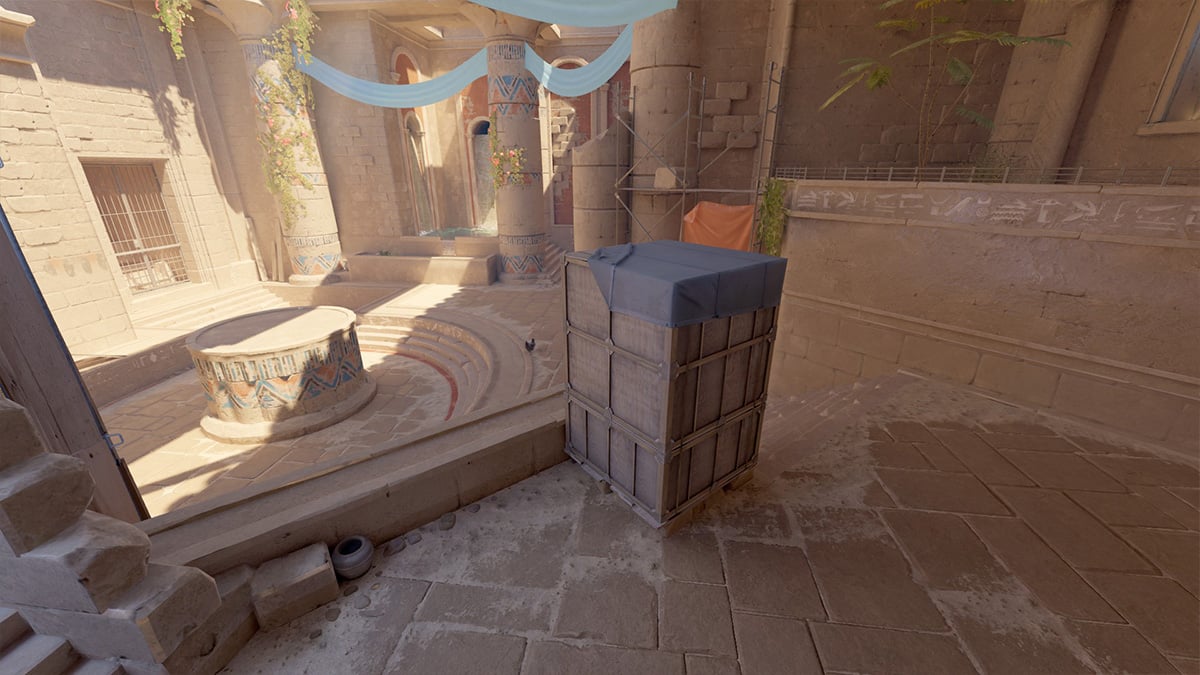
A map favours the T-side if the Terrorists have quicker access to important chokepoints than CTs from their respective spawns. Having quick rotations between the two bombsites, having open bombsites with multiple entry points also helps favour the Ts.

In CS2 however, there aren’t many maps in CS2 that you can call heavily T-sided. Maps like Inferno, Dust2, are barely T-sided, with Terrorists having a round win rate of slightly more than 50%. In competitive play, Anubis is probably the only map that genuinely favours the T-side. The rotation from waters enables the Ts to rotate between the two bombsites quicker and easier, since it rarely falls out of control. Both the bombsites don’t offer a lot of cover for CTs, making it easier for Ts to attack. And finally, middle can be easily contested, and sometimes requires two CTs to properly defend. It makes cutting rotations easier for Ts.

The biggest mistake on the T-Side in CS2

The biggest mistake is forcing one style every round. If you default every round, you become predictable and the CTs will start gambling correctly. If you rush every round, you will eventually run into stacked sites and crossfires, and you will feel like you are smashing your head into a wall. A good T-side is tempo control. You decide when the round is slow, and you decide when it is not.

Article Tags

No tags found

Tournaments

No tournaments found
Saumya Srijan

Saumya Srijan

Counter strike writer saumya
Wallowing in his long-term, wildly unhealthy relationship with Counter-Strike, Saumya has now turned into a full-blown FaZe fan who likes to write about things he loses his sleep over.
More from Saumya Srijan >